Articles Tagged with

anxiety

Home / anxiety
Health

Why Hypnotherapy is the Secret to Navigating Stress in 2026: A London Expert’s Guide

In the hustle of Central London, from the crowded platforms of the Underground to the high-pressure boardrooms of the City, stress has become an accepted part of life. But as we move through 2026, more people are realizing that “managing” stress isn’t enough—we need to rewire how our brains respond to it.

Whether you are looking for hypnotherapy in London or seeking an online hypnotherapist from anywhere in the world, understanding how the subconscious mind works is the first step toward lasting change.

How Hypnotherapy Works: Beyond the Myths

Many people still associate hypnosis with stage shows and loss of control. In reality, clinical hypnotherapy is a state of focused attention and heightened suggestibility. It allows us to bypass the “critical factor” of the conscious mind to reach the subconscious, where our deepest habits and anxieties live.

By accessing this state, we can replace outdated “survival” scripts (like panic or procrastination) with modern, empowering beliefs.

The London Advantage: World-Class Therapy in the Heart of the UK

London has long been a global hub for psychological excellence. Choosing a London-based hypnotherapist means you are working with practitioners who operate in one of the world’s most rigorously regulated and competitive wellness environments.

For my local clients, my clinic offers a sanctuary from the city’s pace. For my global clients, I bring that same “London Standard” of clinical expertise to our online hypnosis sessions via Teams.

Why Online Hypnotherapy is Taking Over in 2026

You no longer need to live in the UK to benefit from a London specialist. In fact, research shows that virtual hypnotherapy can be even more effective for many clients because:

  • Environmental Comfort: You are in your own space, allowing your nervous system to relax faster.
  • No Commute Stress: You don’t have to fight traffic or the Tube immediately after a deep session.
  • Global Access: Whether you are in New York, Dubai, or Singapore, you can access elite care at a time that suits your time zone.

What Can Hypnotherapy Help With?

My practice focuses on the most pressing issues facing high-performers and busy individuals today:

  1. Anxiety & Burnout: Calming the “always-on” nervous system.
  2. Public Speaking: Transforming “stage fright” into presence and authority.
  3. Sleep Optimization: Using hypnotic suggestion to reset your circadian rhythm.
  4. Habit Breaking: From smoking cessation to sugar cravings.

Ready to Reclaim Your Calm?

Visibility is about more than just being seen—it’s about being understood. If you’re ready to see how a blend of traditional hypnosis and modern cognitive techniques can help you thrive, let’s connect.

Book your free 15-minute discovery call today. Whether you want to visit me in my London clinic or meet virtually from anywhere in the world, your journey to a calmer mind starts here.

Health

Can Hypnotherapy Help with Anxiety or Panic Attacks?

Can Hypnotherapy Help with Anxiety or Panic Attacks?

Anxiety and panic attacks affect millions of people across the UK, often disrupting daily life, relationships, and overall well-being. If you’re exploring natural, therapeutic options to regain control, you may be wondering: Can hypnotherapy help with anxiety or panic attacks? The short answer is yes — and the long answer is deeply encouraging.

What Is Hypnotherapy?

Hypnotherapy is a form of guided therapy that uses focused attention, relaxation, and suggestion to access the subconscious mind. Unlike stage hypnosis, clinical hypnotherapy is a safe, evidence-based practice used by trained professionals to help clients overcome emotional, behavioural, and psychological challenges.

At London Hypnotics, we use hypnotherapy to help clients reframe limiting beliefs, reduce physical symptoms of anxiety, and build long-term resilience.

Understanding Anxiety and Panic Attacks

Anxiety is a natural stress response, but when it becomes chronic or leads to panic attacks, it can feel debilitating. Common symptoms include:

  • Persistent worry or racing thoughts
  • Muscle tension and restlessness
  • Difficulty sleeping or concentrating
  • Rapid heartbeat, chest tightness, or breathlessness
  • Feeling detached, dizzy, or overwhelmed

Panic attacks are sudden surges of intense fear or discomfort, often accompanied by physical symptoms that mimic serious medical conditions. They can feel terrifying — but they are treatable.

How Hypnotherapy Helps

Hypnotherapy works by calming the nervous system and addressing the subconscious patterns that fuel anxiety. Here’s how it can support your healing:

1. Rewiring Negative Thought Patterns

Hypnosis helps uncover and reframe deep-rooted beliefs that contribute to anxiety — such as “I’m not safe,” “I can’t cope,” or “I’m not good enough.”

2. Reducing Physical Symptoms

Through deep relaxation and breathwork, hypnotherapy lowers cortisol levels, slows the heart rate, and eases muscle tension — helping you feel physically calmer.

3. Building Coping Strategies

You’ll learn tools to manage triggers, reduce avoidance behaviours, and regain control during anxious moments.

4. Resolving Root Causes

Hypnotherapy can gently explore past experiences, traumas, or emotional blocks that may be contributing to your current anxiety or panic responses.

What the Research Says

Scientific studies support the effectiveness of hypnotherapy for anxiety. A 2016 meta-analysis published in the Journal of Affective Disorders found that hypnosis was significantly more effective than many other psychological interventions in reducing anxiety symptoms.

Another study in Contemporary Hypnosis & Integrative Therapy showed that hypnotherapy reduced panic attack frequency and intensity in patients with panic disorder.

What to Expect in a Session

At London Hypnotics, your first session begins with a detailed consultation to understand your symptoms, triggers, and goals. You’ll then be guided into a relaxed, focused state where we work together to reprogram anxious responses and build emotional resilience.

Sessions are tailored to your unique needs and may include:

  • Relaxation and breathing techniques
  • Positive suggestion therapy
  • Regression therapy (if appropriate)
  • Future pacing and visualisation

All sessions are confidential, compassionate, and designed to empower you.

Is Hypnotherapy Right for You?

Hypnotherapy is suitable for many forms of anxiety, including:

  • Generalised Anxiety Disorder (GAD)
  • Panic Disorder
  • Social Anxiety
  • Health Anxiety
  • Performance Anxiety
  • Phobias and fears

It can also complement other treatments such as Cognitive Behavioural Therapy (CBT), counselling, or medication.

Hypnotherapy in London: Your Path to Calm

If you’re based in London and seeking a holistic, client-centred approach to anxiety or panic attacks, London Hypnotics offers a safe and supportive space to begin your journey. Whether you’re dealing with daily stress or sudden panic episodes, hypnotherapy could be the turning point you’ve been searching for.

Ready to Take the First Step?

Book a free consultation today and discover how hypnotherapy can help you feel calmer, more confident, and in control.

Book Now | Serving Central and Greater London | Online sessions available worldwide.

References


Hammond, D. C. (2010). Hypnosis in the treatment of anxiety- and stress-related disorders. American Journal of Clinical Hypnosis, 53(4), 259–273. https://www.tandfonline.com/doi/abs/10.1080/00029157.2010.10401721

Valentine, K. E., Milling, L. S., Clark, L. J., & Moriarty, C. L. (2019). The efficacy of hypnosis as a treatment for anxiety: A meta-analysis. International Journal of Clinical and Experimental Hypnosis, 67(3), 336–363. https://pubmed.ncbi.nlm.nih.gov/31125299/

Hypnotherapy Directory. (n.d.). How hypnotherapy can help with anxiety: A natural approach. https://www.hypnotherapy-directory.org.uk/articles/how-hypnotherapy-can-help-with-anxiety-a-natural-approach

Beechwood Therapy. (2023). Can hypnotherapy help with panic attacks? https://www.beechwoodtherapy.co.uk/post/can-hypnotherapy-help-with-panic-attacks

Reveri. (2024). Hypnosis for panic attacks: Calm your mind naturally. https://www.reveri.com/knowledge/hypnosis-for-panic-attacks

anxious woman
Health

Finding Calm: How Hypnotherapy in London Can Help with Anxiety

Anxiety is something most of us experience at some point in our lives. For some, it’s occasional nerves before a big event. For others, it can feel like a constant companion — racing thoughts, tightness in the chest, difficulty sleeping, and a sense of dread that just won’t go away.

Traditional approaches like therapy, medication, and lifestyle changes are well-known options. But more people are now asking: can hypnotherapy help with anxiety?

The answer is yes — and research is increasingly supporting it. In this guide, we’ll explore what hypnotherapy really is, how it works for anxiety, what science says, and what you can expect if you decide to try it.

Image by Freepik

Understanding Anxiety

Anxiety isn’t “just in your head.” It’s a whole-body experience. When your brain perceives a threat — whether real or imagined — your nervous system reacts by flooding your body with stress hormones like cortisol and adrenaline.

That’s why anxiety feels so physical:

  • Your heart races.
  • Your muscles tense.
  • Your breathing becomes shallow.
  • Your mind loops through “what ifs.”

Over time, your body can get stuck in this cycle, reacting with stress even when no danger is present.


What Hypnotherapy Really Is (and Isn’t)

When people hear the word hypnosis, they often picture stage acts with people clucking like chickens. That’s entertainment — not therapy.

Hypnotherapy is a therapeutic process that uses hypnosis to create a state of deep relaxation and focused attention. In this state, your subconscious mind becomes more open to positive change.

Important to know:

  • You are always in control.
  • You cannot be made to do anything against your will.
  • Most people describe the experience as calming and refreshing.

Think of it as a powerful tool to reset your mental patterns and reduce the intensity of anxious responses.


How Hypnotherapy Works for Anxiety

Anxiety often lives in the subconscious mind — the place where habits, beliefs, and automatic reactions are stored. Hypnotherapy helps by addressing anxiety at this deeper level.

Here’s how:

  1. Relaxation: Hypnotherapy calms the nervous system, reducing the body’s fight-or-flight response.
  2. Reframing thoughts: Through guided suggestions, anxious patterns of thinking can be softened and replaced with calmer, more balanced ones.
  3. Building confidence: Hypnotherapy can boost self-belief in situations that previously triggered fear.
  4. Developing coping tools: Many clients learn self-hypnosis techniques they can use outside of sessions to stay grounded.

What the Research Says

Scientific studies support hypnotherapy as an effective approach for reducing anxiety:

  • A 2016 meta-analysis found that hypnosis produced significant reductions in anxiety across different groups of people.
  • Hypnotherapy has been shown to help with generalized anxiety disorder, test and performance anxiety, medical anxiety (such as before surgery), and even public speaking fears.
  • Brain imaging studies suggest that hypnosis can actually change how the brain processes stress and fear.

While more research is always needed, the evidence so far is promising — and it matches what many clients report in practice.


A Client Story: From Overwhelm to Calm

One client of mine (let’s call her Sarah) had been living with anxiety for years. She described lying awake at night with her heart racing, her mind running through worst-case scenarios.

After just a few hypnotherapy sessions, she noticed a shift. “It’s like I finally have a pause button for my thoughts,” she said. “The same situations come up, but I don’t spiral the way I used to. I feel calmer and more in control.”

Sarah’s experience isn’t unusual — many people find hypnotherapy gives them tools they can carry into daily life.


What to Expect in a Hypnotherapy Session

If you’re new to hypnotherapy, here’s what a typical session might look like:

  1. Initial conversation – We’ll talk about your goals, challenges, and any questions you have.
  2. Guided relaxation – I’ll help you enter a calm, focused state — similar to a daydream.
  3. Therapeutic suggestions – While in this relaxed state, I’ll guide you with imagery and positive suggestions aimed at reducing anxiety.
  4. Reflection and tools – After the session, we’ll talk about your experience and I’ll give you strategies you can use between sessions.

Sessions are always tailored to your unique needs.


FAQs About Hypnotherapy for Anxiety

Is hypnotherapy safe?
Yes. It’s non-invasive, drug-free, and considered very safe when practiced by a trained professional.

Will I lose control?
No. You remain fully aware and in control at all times. Hypnosis is simply a state of focused relaxation.

How many sessions will I need?
That depends on the individual. Some people notice changes after just one or two sessions, while others benefit from several over a few months.

Can hypnotherapy replace therapy or medication?
Hypnotherapy is often most effective as a complementary approach. It can work alongside counseling, medical care, or lifestyle changes.


Is Hypnotherapy Right for You?

If anxiety has been holding you back, hypnotherapy may be worth exploring. It’s gentle, natural, and focused entirely on helping you feel calmer and more confident.

While it’s not a magic cure, many people find it brings lasting relief — and gives them practical tools to manage life’s challenges.


How to book?

Anxiety doesn’t have to control your life. With the right support, it’s possible to break free from the constant cycle of worry and find peace of mind.

Hypnotherapy is one of the most powerful tools for achieving that calm — backed by research, rooted in safety, and tailored to you.

If you’re curious about how it could help you, I invite you to book your hypnotherapy consultation with me. It may be the first step toward a calmer, more balanced life.

Health

Embracing a New Chapter: Navigating Empty Nest Syndrome with Positivity

Life moves swiftly. It feels like only yesterday you were staring at those two pink lines on a pregnancy test or hearing your baby’s heartbeat for the first time. From nurturing a completely dependent newborn to celebrating their first steps, words, and school days—time flies, and suddenly, they’re packing their bags for university or a new adventure. That’s when it hits you: your child isn’t a child anymore.

Empty nest syndrome

While movies might portray this stage as a liberating new beginning for parents, the reality is often different. Studies show that 47% of British parents experience empty nest syndrome, with 94% admitting they weren’t prepared for the sudden quiet at home.

This transition can bring loneliness, sadness, and even an identity crisis. But it’s also an opportunity—to rediscover yourself, reignite old passions, and embrace this next phase with optimism.

Understanding Empty Nest Syndrome

Empty nest syndrome isn’t a clinical diagnosis, but its emotional weight is very real. Whether your child is leaving for boarding school, university, marriage, or their own home, the shift from an active to a more passive parenting role can be challenging.

Common symptoms include:

  • Hopelessness – Without the daily routines of parenting, you may feel a loss of purpose.
  • Frustration – After years of involvement, stepping back can leave you feeling sidelined.
  • Emotional distress – Fear of aging, worries about your marriage, or sudden waves of grief are normal but should be managed.
  • Anxiety – It’s natural to worry, but excessive checking-in or sleeplessness may signal deeper stress.

4 Ways to Cope & Thrive

  1. Celebrate Their Independence
    This transition is a sign of your child’s growth. Encourage them, rather than making them feel guilty for leaving.
  2. Rediscover Yourself
    Have you put hobbies, travel, or personal goals on hold? Now’s the time to focus on your dreams.
  3. Reconnect with Loved Ones
    Strengthen your relationship with your partner, friends, or others in the same phase. Plan trips, date nights, or join a new community.
  4. Seek Support
    If emotions feel overwhelming, talking to a therapist or joining a support group can help.

How Hypnotherapy Can Help

Hypnotherapy is a powerful tool to reframe anxiety, process grief, and embrace change with confidence. By rewiring subconscious fears, you can shift from sadness to excitement for this new chapter.

I’m Antonios, supporting individuals overcome their issues. If you’re struggling with empty nest syndrome and want a positive, calm approach to moving forward, I’d love to help.

In our sessions, you’ll learn to:
✔️ Process emotions in a healthy way
✔️ Regain confidence and purpose
✔️ Build resilience for life’s transitions

Therapy is available in-person or online—whatever works best for you.

Ready to embrace this new phase with peace and excitement? Let’s talk.

Book a session with me with Hypnotherapy in London.

Hypnosis in Action
Health

Is Hypnosis Real? How it Works and What Science says.

As a hypnotherapist in London, I often encounter scepticism about hypnosis. Many people wonder: Is hypnosis real, or just a stage trick? The short answer is yes, hypnosis is real, and scientific research backs its effectiveness for therapy, pain management, and behavioural change.

In this article, we’ll explore the science behind hypnosis, how it works, and its proven benefits—so you can make an informed decision about hypnotherapy in London or anywhere else.

What Is Hypnosis?

Hypnosis is a focused state of attention where individuals become more open to suggestion while remaining fully aware. Contrary to popular myths, you cannot be controlled against your will—instead, hypnosis helps bypass the critical mind to promote positive change.

According to Cleveland Clinic, hypnosis is a legitimate therapeutic tool used in clinical settings for:

  • Anxiety & stress relief
  • Smoking cessation
  • Weight loss
  • Pain management
  • Overcoming phobias

The Science Behind Hypnosis

Research shows that hypnosis isn’t just relaxation—it creates measurable changes in brain activity.

1. Hypnosis Alters Brain Function

TIME article highlights studies using fMRI scans, revealing that hypnotised individuals show:

  • Reduced activity in the default mode network (linked to self-focused thoughts)
  • Increased connectivity between brain regions, enhancing focus and suggestibility

This explains why hypnosis helps people break negative thought patterns and adopt healthier habits.

2. Hypnosis for Pain Management

Healthline reports that hypnosis can reduce pain perception by up to 40%, making it a powerful alternative to medication. Studies show it’s effective for:

  • Chronic pain
  • Childbirth (hypnobirthing)
  • Dental procedures

3. Hypnosis & Behavioural Change

The UK Hypnosis Network explains that hypnosis works by accessing the subconscious mind, where habits and emotions reside. This is why it’s so effective for:

  • Quitting smoking
  • Overcoming insomnia
  • Boosting confidence

Debunking Hypnosis Myths

✅ Myth: Hypnosis is mind control.
Fact: You’re always in control—hypnosis simply helps you focus deeply on positive suggestions.

✅ Myth: Only weak-minded people can be hypnotised.
Fact: Research shows that people with higher imagination and focus respond best to hypnosis.

✅ Myth: Hypnosis is just relaxation.
Fact: While relaxation helps, hypnosis induces a unique trance state with proven neurological effects.

Final Verdict: Hypnosis Is Real & Effective

Science confirms that hypnosis is a legitimate therapeutic tool—not magic, but a powerful psychological technique. Whether you’re seeking hypnotherapy in London for anxiety, addiction, or performance enhancement, hypnosis offers a drug-free, evidence-based solution.

Ready to Try Hypnotherapy in London?

As a certified London hypnotherapist, I help clients overcome mental blocks, reduce stress, and achieve lasting change. Book a consultation today and experience the science-backed benefits of hypnosis!

References

  1. Healthline. (n.d.). Is Hypnosis Real? Retrieved from https://www.healthline.com/health/is-hypnosis-real
  2. Cleveland Clinic. (n.d.). Hypnosis. Retrieved from https://my.clevelandclinic.org/health/treatments/22676-hypnosis
  3. TIME. (2018). Is Hypnosis Real? Here’s What Science Says. Retrieved from https://time.com/5380312/is-hypnosis-real-science/
  4. UK Hypnosis. (2019). Is Hypnosis Real or Just Imaginings? Retrieved from https://www.ukhypnosis.com/2019/02/11/is-hypnosis-real-or-just-imaginings/
  5. Deeley, Q. et al. (2012).“Modulation of pain perception by hypnosis and fMRI.”
  6. Jiang, H. et al. (2017).“Brain Mechanisms of Hypnotic Responders.”
    • Findings: Highly hypnotizable individuals show stronger functional connectivity in the dorsolateral prefrontal cortex (suggestibility control).
    • Source: *NeuroImage, 152, 400-410.*
  7. Elkins, G. et al. (2007).“Hypnotherapy for Chronic Pain Management.”
  8. Patterson, D. R., & Jensen, M. P. (2003).“Hypnosis and Clinical Pain.”
  9. Schoenberger, N. E. (2000).“Hypnosis in the Treatment of Anxiety.”
  10. Green, J. P., & Lynn, S. J. (2000).“Hypnosis and Smoking Cessation: A Meta-Analytic Study.”
  11. Palsson, O. S. et al. (2002).“Hypnosis Treatment for Severe IBS.”Findings: 80% of IBS patients improved with hypnosis, with long-term benefits.
  12. Source: *Gastroenterology, 122(7), 1770-1777.*

Quit smoking
Health

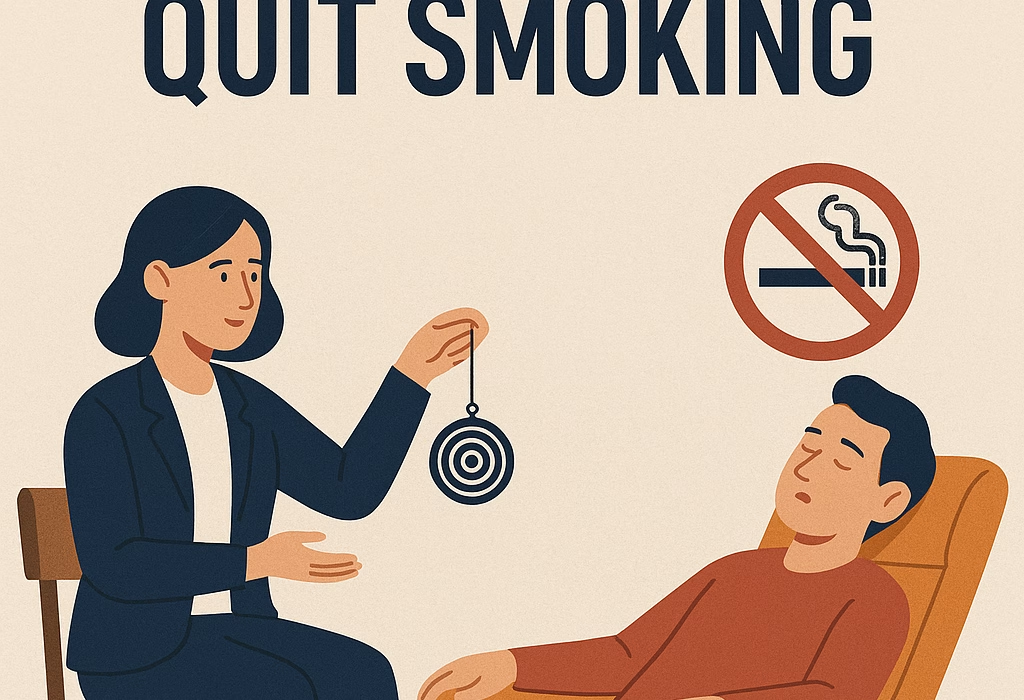
Quit Smoking for Good with Hypnotherapy in London

Giving up smoking can be one of the most challenging habits to break. It’s not just the nicotine that keeps you hooked—it’s the deeply ingrained routines, the emotional triggers, and the subconscious associations that make quitting so difficult.

Many people try patches, gum, or willpower alone, only to find themselves reaching for another cigarette. But what if you could rewire your mind to effortlessly become a non-smoker? That’s where hypnotherapy comes in—a powerful, fast, and proven method to help you quit smoking for good.

Why Hypnotherapy Works When Other Methods Fail

Most of my clients come to me after hearing about someone who quit smoking in just one session. And yes—it’s absolutely possible. Hypnotherapy has one of the highest success rates for smoking cessation because it works directly with the subconscious mind, where habits and cravings are rooted, and it’s no surprise: studies show hypnotherapy can be 2-3x more effective than nicotine replacement therapy (NRT) or going cold turkey (Green & Lynn, 2000).

Here’s why it works:

  • Targets the subconscious mind (where 95% of habits live) to dismantle cravings at their root.
  • Eliminates withdrawal anxiety by reframing your mental associations with smoking.

Cochrane meta-analysis (Barnes et al., 2019) found hypnosis significantly improved quit rates compared to minimal intervention, while a Mayo Clinic review acknowledges its potential to “alter subconscious triggers” that sustain addiction.

Unlike other methods that rely on willpower or nicotine replacement, hypnotherapy helps you:

  • Remove the psychological addiction – Breaking the mental patterns that make you reach for a cigarette.
  • Reset your identity – Shifting your self-image from “someone trying to quit” to a natural non-smoker.
  • Eliminate cravings – Many clients report that after hypnosis, they simply forget about smoking.

How Does Hypnotherapy Work So Quickly?

Your subconscious mind controls 95% of your behaviors, habits, and automatic responses. When you’re hypnotized, you enter a deeply relaxed state where your mind is open to positive suggestions.

In this state, we can:
✔ Reprogram your associations with smoking (so cigarettes no longer feel rewarding).
✔ Strengthen your motivation by aligning quitting with your deepest values (health, family, freedom).
✔ Install new, healthier habits to replace smoking effortlessly.

Imagine waking up one day and realizing you no longer think about cigarettes—no cravings, no struggle, just freedom. That’s the power of hypnotherapy.

The Life-Changing Benefits of Quitting Smoking

When you become a non-smoker, you’ll experience:

  • Better health – Reduced risk of cancer, heart disease, and lung damage.
  • More energy – Improved breathing, circulation, and stamina.
  • Sharper mind – No more brain fog; better focus and mental clarity.
  • Financial freedom – Save thousands per year by not buying cigarettes.
  • Confidence & control – Prove to yourself that you can change any habit.

Why Keep Struggling When You Can Quit Easily?

You’ve tried willpower. You’ve tried cutting down. Maybe you’ve even tried quitting before, only to start again. This time, let your mind do the work for you.

Hypnotherapy offers the fastest, most natural way to become a non-smoker—without withdrawal, cravings, or constant struggle.

Ready to quit for good?
👉 Contact me to start your smoke-free life today.

“You don’t have to quit smoking—you just have to become a non-smoker.”

References

  1. Green, J. P., & Lynn, S. J. (2000). Hypnosis and suggestion-based approaches to smoking cessation: An examination of the evidence. International Journal of Clinical and Experimental Hypnosis, 48(2), 195-224.
  2. Barnes, J., McRobbie, H., Dong, C. Y., Walker, N., & Hartmann-Boyce, J. (2019). Hypnotherapy for smoking cessation. Cochrane Database of Systematic Reviews, 6(6), CD001008.
  3. Mayo Clinic (2022). Hypnosis for smoking cessation: Does it work? Retrieved from https://www.mayoclinic.org/
  4. American Heart Association (2023). Benefits of Quitting Smoking. Retrieved from https://www.heart.org/
  5. Centers for Disease Control and Prevention (CDC, 2023). Health Benefits of Quitting Smoking Over Time. Retrieved from https://www.cdc.gov/
Gastrointestinal System
Health, Lifestyle

Gut-Directed Hypnotherapy for SIBO: How to Heal Your Mind-Gut Connection Naturally

Small Intestinal Bacterial Overgrowth (SIBO) is a complex and often frustrating condition that affects millions of people worldwide. Characterized by an overgrowth of bacteria in the small intestine, SIBO can lead to a host of uncomfortable symptoms, including bloating, gas, abdominal pain, diarrhea, constipation, and malabsorption of nutrients. While antibiotics and dietary changes are commonly prescribed treatments, many patients find that these approaches only provide temporary relief or fail to address the root cause of the issue. This is where gut-directed hypnotherapy comes in—a powerful, evidence-based tool that can help clear SIBO by addressing the mind-gut connection.

Small Intestine Bacterial Overgrowth (SIBO) Illustration courtesy of Freepik

Understanding SIBO and the Mind-Gut Connection

SIBO occurs when bacteria that normally reside in the large intestine migrate to the small intestine, where they don’t belong. This overgrowth disrupts digestion, leading to the symptoms mentioned above. While factors like diet, antibiotics, and gut motility issues can contribute to SIBO, emerging research highlights the role of stress and the brain-gut axis in the development and persistence of the condition.

The brain-gut axis is a bidirectional communication system between the central nervous system and the enteric nervous system (the “second brain” in the gut). Stress, anxiety, and trauma can disrupt this communication, leading to changes in gut motility, immune function, and bacterial balance. This is why many people with SIBO also struggle with conditions like irritable bowel syndrome (IBS), anxiety, and depression.

What is Gut-Directed Hypnotherapy?

Gut-directed hypnotherapy is a specialized form of hypnotherapy designed to address gut-related issues by calming the nervous system and restoring balance to the brain-gut axis. During a session, a trained hypnotherapist guides the patient into a deeply relaxed state and uses visualization, suggestion, and other techniques to promote healing in the gut.

Research has shown that gut-directed hypnotherapy can significantly improve symptoms of IBS, which often overlaps with SIBO. Studies have demonstrated that hypnotherapy can reduce pain, bloating, and irregular bowel movements while improving overall quality of life. While less research has specifically focused on SIBO, the principles of gut-directed hypnotherapy make it a promising complementary treatment for this condition.

How Gut-Directed Hypnotherapy Can Help Clear SIBO

  1. Reducing Stress and Calming the Nervous System
    Chronic stress is a major contributor to SIBO, as it can impair gut motility and create an environment where bacteria thrive. Gut-directed hypnotherapy helps activate the parasympathetic nervous system (the “rest and digest” mode), which counteracts the effects of stress and promotes healthy digestion.
  2. Improving Gut Motility
    One of the key factors in SIBO is impaired motility in the small intestine, which allows bacteria to accumulate. Hypnotherapy can help regulate the migrating motor complex (MMC), the wave-like contractions that clear bacteria from the small intestine between meals. By enhancing the MMC, hypnotherapy can help prevent bacterial overgrowth.
  3. Restoring Balance to the Brain-Gut Axis
    Hypnotherapy works to rewire the brain-gut connection, reducing hypersensitivity in the gut and improving communication between the brain and the digestive system. This can help alleviate symptoms like pain, bloating, and irregular bowel movements.
  4. Addressing Emotional Triggers
    Many people with SIBO have a history of trauma, anxiety, or chronic stress, which can exacerbate gut issues. Hypnotherapy provides a safe space to process and release these emotions, reducing their impact on the gut.
  5. Enhancing the Effectiveness of Other Treatments
    Gut-directed hypnotherapy can be used alongside antibiotics, probiotics, and dietary changes to enhance their effectiveness. By addressing the mind-gut connection, hypnotherapy can help create a more favorable environment for healing.

What to Expect in a Gut-Directed Hypnotherapy Session

During a gut-directed hypnotherapy session, you’ll be guided into a state of deep relaxation. Your therapist may use imagery, such as visualizing a calm, healing light flowing through your digestive system, or suggest positive affirmations to reinforce healthy gut function. Over time, these sessions can help retrain your brain and gut to work together more harmoniously.

Many people begin to notice improvements in their symptoms after just a few sessions, though the number of sessions needed varies depending on the individual. Hypnotherapy is a safe, non-invasive, and drug-free approach that can be tailored to your specific needs.

A Holistic Approach to SIBO Healing

While gut-directed hypnotherapy is not a standalone cure for SIBO, it is a valuable tool in a holistic treatment plan. By addressing the mind-gut connection, hypnotherapy can help break the cycle of stress and dysfunction that perpetuates SIBO. Combined with dietary changes, probiotics, and other therapies, it can support long-term healing and help you regain control of your gut health.

If you’re struggling with SIBO and haven’t found relief through conventional treatments, consider exploring gut-directed hypnotherapy. It may be the missing piece in your journey to healing.


About the Author
Antonios Koletsas is a certified hypnotherapist who specializes in gut-directed hypnotherapy for SIBO, IBS, and other digestive disorders. Passionate about helping clients heal from the inside out, Antonios combines evidence-based techniques with a compassionate, personalized approach to support lasting change. Contact Antonios today to learn more about how hypnotherapy can help you reclaim your gut health by submitting the contact form or calling 020 7101 3284.

References

  1. SIBO Overview
    Ghoshal, U. C., Shukla, R., & Ghoshal, U. (2017). Small intestinal bacterial overgrowth and irritable bowel syndrome: A bridge between functional organic dichotomy. Gut and Liver, 11(2), 196–208. https://doi.org/10.5009/gnl16126
  2. Brain-Gut Axis and Stress
    Mayer, E. A., Tillisch, K., & Gupta, A. (2015). Gut/brain axis and the microbiota. Journal of Clinical Investigation, 125(3), 926–938. https://doi.org/10.1172/JCI76304
  3. Hypnotherapy for IBS
    Whorwell, P. J., Prior, A., & Faragher, E. B. (1984). Controlled trial of hypnotherapy in the treatment of severe refractory irritable bowel syndrome. The Lancet, 324(8414), 1232–1234. https://doi.org/10.1016/S0140-6736(84)92793-4
  4. MMC Dysfunction and SIBO
    Pimentel, M., Soffer, E. E., Chow, E. J., Kong, Y., & Lin, H. C. (2002). Lower frequency of MMC is found in IBS subjects with abnormal lactulose breath test, suggesting bacterial overgrowth. Digestive Diseases and Sciences, 47(12), 2639–2643. https://doi.org/10.1023/A:1021039032413
  5. Stress and Gut Microbiota
    Foster, J. A., Rinaman, L., & Cryan, J. F. (2017). Stress & the gut-brain axis: Regulation by the microbiome. Neurobiology of Stress, 7, 124–136. https://doi.org/10.1016/j.ynstr.2017.03.001
  6. Hypnotherapy and Gut Motility
    Simrén, M., Ringström, G., Björnsson, E. S., & Abrahamsson, H. (2004). Treatment with hypnotherapy reduces the sensory and motor component of the gastrocolonic response in irritable bowel syndrome. Psychosomatic Medicine, 66(2), 233–238. https://doi.org/10.1097/01.psy.0000116964.76529.6e
  7. Emotional Triggers and Gut Health
    Bradford, K., Shih, W., Videlock, E. J., Presson, A. P., Mayer, E. A., Chang, L., & Naliboff, B. D. (2012). Association between early adverse life events and irritable bowel syndrome. Clinical Gastroenterology and Hepatology, 10(4), 385–390. https://doi.org/10.1016/j.cgh.2011.12.018
  8. Integrative Approaches to SIBO
    Chey, W. D., Kurlander, J., & Eswaran, S. (2015). Irritable bowel syndrome: A clinical review. JAMA, 313(9), 949–958. https://doi.org/10.1001/jama.2015.0954
  9. Vagus Nerve and Digestion
    Bonaz, B., Sinniger, V., & Pellissier, S. (2017). The vagus nerve in the neuro-immune axis: Implications in the pathology of the gastrointestinal tract. Frontiers in Immunology, 8, 1452. https://doi.org/10.3389/fimmu.2017.01452
  10. Rome IV Criteria for Functional Gut Disorders
    Drossman, D. A., & Hasler, W. L. (2016). Rome IV—Functional GI disorders: Disorders of gut-brain interaction. Gastroenterology, 150(6), 1257–1261. https://doi.org/10.1053/j.gastro.2016.03.035
Health, Lifestyle

Hypnotherapy for Anxiety: Procedure, Benefits and More

What is Anxiety?

Feeling anxious is normal part of life, especially around work, money, family, school or health. However, it when it becomes chronic and felt in many situations in everyday life then its characterised as anxiety disorder. For people with these disorders, life can feel overwhelmed especially in daily activities that involves new situations, exposure to unknown people or visiting new places.

There are several types of anxiety disorders including:

The role of Hypnotherapy in treating anxiety

Hypnotherapy plays a significant role in treating anxiety, offering an effective complementary approach to traditional psychological interventions. Research indicates that hypnosis can reduce anxiety more effectively when combined with other psychological treatments, such as cognitive behavioral therapy (CBT) or exposure therapy

Mechanisms of Action

Hypnotherapy works by inducing a state of focused attention and reduced peripheral awareness, enhancing a person’s responsiveness to suggestions. This relaxed state allows individuals to:

  1. Tap into internal resources not easily accessible in a fully conscious state
  2. Alter brainwave patterns, promoting relaxation and calmness
  3. Gain greater emotional control and reduce negative thinking

Effectiveness

Studies have demonstrated the efficacy of hypnotherapy in anxiety treatment:

  • A meta-analysis found that hypnosis reduced anxiety more than 79% compared to control participants at the end of active treatment.
  • Hypnosis has shown to be effective in reducing state anxiety and tension.
  • It may positively affect the cardiovascular system by reducing sympathetic activation and increasing parasympathetic tone.

Benefits of Hypnotherapy for Anxiety

Hypnotherapy offers several benefits for individuals struggling with anxiety:

  • Helps break the cycle of negative thinking and dread
  • Builds confidence and self-esteem
  • Encourages relaxation and calmness
  • Allows visualization of positive outcomes
  • Addresses root causes of anxiety
  • Provides a safe and controlled environment for facing fears

Ready to embark your Hypnotherapy Journey?

If you’re struggling with anxiety, consider the transformative benefits of hypnotherapy. This powerful tool helps you tap into your subconscious mind to uncover the root causes of your anxiety and reframe negative thought patterns, leading to lasting relief and a more positive outlook on life.

I offer a personalized approach tailored to your unique experiences and challenges, ensuring that you feel comfortable exploring your thoughts in a safe and supportive environment. Utilizing proven techniques, I have helped many clients overcome their anxiety by promoting relaxation and empowering them to regain control over their thoughts and emotions.

Conveniently located in Islington, London, you can learn more about my services at London Hypnotics. If you’re ready to take the first step towards overcoming anxiety, call me at 020 7101 3284 or visit my website to book your session today.

Don’t let anxiety hold you back any longer—embrace the opportunity for change through hypnotherapy!

Sources

https://www.nimh.nih.gov/health/topics/anxiety-disorders

https://www.frontiersin.org/journals/psychology/articles/10.3389/fpsyg.2024.1411835/full

https://www.thetimes.com/article/how-hypnotherapy-helps-soothe-patients-on-nhs-waiting-lists-7fczlr2lx?id=1756158124&gad_source=1

https://www.nimh.nih.gov/health/publications/generalized-anxiety-disorder-gad

https://www.nimh.nih.gov/health/publications/panic-disorder-when-fear-overwhelms

https://www.nimh.nih.gov/health/publications/social-anxiety-disorder-more-than-just-shyness

https://pmc.ncbi.nlm.nih.gov/articles/PMC11258040

https://pubmed.ncbi.nlm.nih.gov/31251710

https://www.medicalnewstoday.com/articles/hypnosis-for-anxiety

Pictures Designed by Freepik

Health

What Science Says About Hypnotherapy?

When people think of hypnosis, they often envision stage performances featuring a clock-swinging magician or scenes where volunteers reveal secrets while under a spell. However, hypnosis has a solid scientific foundation and has been shown through clinical research to alleviate pain, reduce anxiety, support smoking cessation, assist with weight loss, and improve sleep quality. It can also help children and teenagers regulate emotions and behaviors. Additionally, self-hypnosis is a practice some individuals use to manage stress and enhance overall well-being.

Hypnosis is characterized by an immersive, non-judgmental state of deep relaxation, which has been studied and refined for centuries. The term “hypnosis” was popularized in the 19th century by Dr. James Braid, a Scottish surgeon who discovered that focused concentration could make the mind more receptive to suggestions. Although this discovery was initially met with skepticism, the medical community has gradually explored and expanded its use over time.

A certified hypnotherapist typically begins by assessing a client’s susceptibility to hypnosis, as not everyone has the same level of responsiveness—though research indicates around two-thirds of adults are receptive. The therapist then guides the individual into a state of deep relaxation, often by evoking sensory imagery such as the sounds of the ocean or the warmth of the sun. The goal is to help the person enter a focused and calming mental space where their immediate surroundings fade into the background.

This process induces a state referred to as the “hypnotic state,” characterized by a combination of dissociation, immersion, and heightened openness. It allows people to become more responsive to therapeutic suggestions, which can help them detach from past traumas or visualize solutions to current challenges. For some, a single session is sufficient to bring about change, while others might incorporate hypnotherapy as an ongoing part of their mental health care.

Entering and emerging from hypnosis is similar to other altered states of consciousness, such as a “flow state,” where a person becomes deeply engrossed in an activity and loses track of time, or during meditation. Unlike meditation, however, hypnosis focuses on making individuals more open to specific suggestions. Self-hypnosis is also accessible to many, supported by apps that guide users through the process and promote goals like stress relief or behavior change.

Modern brain-imaging studies have provided insights into what happens in the brain during hypnosis. For instance, activity in areas related to task-switching can diminish, and connections to regions responsible for self-reflection may weaken. This could explain why individuals in a hypnotic state often report reduced self-consciousness. Additionally, parts of the brain involved in autonomic functions like heart rate and breathing may relax, contributing to the physical calmness often experienced.

Hypnosis has even found applications in surgical settings. For example, in certain breast cancer surgeries, patients may choose between general anaesthesia and localized anaesthesia combined with hypnotherapy. This approach, known as “hypnosedation,” has been studied in clinical trials and linked to reduced preoperative anxiety, minimized pain medication requirements, and less post-surgery discomfort.

Despite growing evidence supporting the use of hypnosis, challenges and skepticism remain. The lack of double-blind study designs in hypnosis research poses a difficulty since participants and practitioners inevitably know when hypnosis is being used. Moreover, while hypnosis has powerful potential, it has sometimes been misused, such as in attempts to recover false memories, leading to legal restrictions on such practices.

When applied by trained professionals, hypnosis can be a valuable tool for meaningful transformation. Susceptibility to suggestion, often seen as a vulnerability, can be harnessed as a source of strength in therapeutic contexts.

To discuss how I can help you with Hypnotherapy click here or call 020 7101 3284

Hypnotherapist Antonios

Health, Lifestyle

Hypnotherapy to reduce Anxiety.

What is Anxiety?

Anxiety is a common emotional state characterized by feelings of worry, unease, or fear that can range from mild to severe. Here are the key points about anxiety:

Designed by Freepik

Definition and Characteristics

Anxiety is:

  • A feeling of fear, dread, and uneasiness
  • Characterized by tension, worried thoughts, and physical changes like increased blood pressure
  • A future-oriented, long-acting response focused on a diffuse threat
  • Part of the body’s natural ‘fight or flight’ response to stress or perceived danger

Physical Symptoms

Common physical symptoms of anxiety include:

  • Sweating
  • Feeling restless or tense
  • Rapid heartbeat
  • Shortness of breath
  • Dizziness
  • Muscle tension

Normal vs. Problematic Anxiety

  • Some anxiety is normal and even helpful in certain situations
  • Anxiety becomes problematic when it’s excessive, persistent, and interferes with daily life
  • When anxiety is severe and chronic, it may be diagnosed as an anxiety disorder

Anxiety Disorders

Anxiety disorders are mental health conditions characterized by excessive and persistent anxiety. Common types include:

  • Generalized Anxiety Disorder (GAD)
  • Panic Disorder
  • Social Anxiety Disorder
  • Specific Phobias

Prevalence

  • Anxiety disorders are prevalent, affecting an estimated one in six adults in the UK
  • In the US, around 40 million people have an anxiety disorder

How hypnotherapy can help with Anxiety

Hypnotherapy can be a useful approach for managing and alleviating anxiety. It guides individuals into a deeply relaxed state, known as hypnosis, where the mind is more open to suggestion and focused on positive changes. Here’s how hypnotherapy can help with anxiety:

Deep Relaxation: Hypnosis induces a state of deep relaxation, reducing stress levels and calming the nervous system. This relaxation can help counteract the physical symptoms of anxiety, such as rapid heart rate, tension, and restlessness.

Changing Negative Thought Patterns: Anxiety often stems from persistent negative thinking or fears. During hypnosis, a hypnotherapist can introduce positive suggestions and help reshape negative thought patterns. This can lead to more constructive thinking and reduce anxiety-triggering thoughts.

Addressing Underlying Issues: Hypnotherapy can be used to explore and uncover subconscious issues that may be contributing to anxiety, such as past traumas or unresolved emotional conflicts. By bringing these to the surface in a safe way, individuals can process and release the emotions tied to their anxiety.

Building Coping Mechanisms: Through hypnosis, clients can learn new coping strategies, like visualization techniques, to handle anxious situations more effectively. Hypnotherapy may instill feelings of calm and confidence that help manage future episodes of anxiety.

Reducing Fear and Phobias: Hypnotherapy is particularly effective in addressing specific phobias or irrational fears that cause anxiety. By targeting these fears directly, individuals can desensitize themselves to triggers, lowering anxiety levels over time.

Enhancing Mindfulness and Self-Control: Hypnotherapy often teaches individuals how to be more mindful of their emotions and thoughts, giving them greater control over anxiety responses. This helps them become more resilient in stressful situations.

At London Hypnotics we offer tailored hypnotherapy sessions for each individual. We believe every human being has unique characteristics and there is no cure-all technique to fix everyone’s issues. If you are ready to embark on your journey to a more stress-free life, without worries and anxiety and with a sharp and clear mind then I strongly suggest that you book your free consultation via or call 020 7101 3284

Sources:

https://www.apa.org/topics/anxiety

https://medlineplus.gov/anxiety.html

https://www.mentalhealth.org.uk/our-work/public-engagement/mental-health-awareness-week/anxiety-report/what-anxiety

https://www.medicalnewstoday.com/articles/323454

https://pubmed.ncbi.nlm.nih.gov/31251710

https://www.hypnotherapy-directory.org.uk/topics/anxiety.html

1 2 3 4
Privacy Settings
We use cookies to enhance your experience while using our website. If you are using our Services via a browser you can restrict, block or remove cookies through your web browser settings. We also use content and scripts from third parties that may use tracking technologies. You can selectively provide your consent below to allow such third party embeds. For complete information about the cookies we use, data we collect and how we process them, please check our Privacy Policy
Youtube
Consent to display content from - Youtube
Vimeo
Consent to display content from - Vimeo
Google Maps
Consent to display content from - Google
Spotify
Consent to display content from - Spotify
Sound Cloud
Consent to display content from - Sound