Category

Health

Home / Health
A tranquil hypnotherapy scene, person meditating with glowing mind, hypnotic spiral blending into London skyline, abstract subconscious symbols, soft blues and gold, professional digital art
Health, Lifestyle

What happens in a hypnotherapy session?

Hypnotherapy is a collaborative process where we work together to help you achieve your desired changes. While everyone progresses at their own pace, most clients notice meaningful improvements within 3 to 5 sessions.

Since it typically takes around 28 days to form a new habit, a block of 3 sessions (£350.00) is an ideal way to initiate and refine changes based on your response.

Key Things to Know About Hypnotherapy:

  • You remain in control—you can come out of trance anytime.
  • You cannot be forced to say, do, or reveal anything against your will.
  • You choose your level of trance, going only as deep as you’re comfortable with.
  • You’ll remember everything, just like in a normal conversation.

Before Your Session:

  • Avoid heavy meals, strong coffee, or alcohol beforehand.
  • Wear comfortable clothing.
  • If you wear contact lenses, be prepared to remove them.
  • Check out the FAQs to learn more about the trance experience.

It’s helpful to reflect on your goals beforehand. Consider:

  • What do you want to achieve?
  • What’s been holding you back?
  • How will you know when you’ve succeeded?
  • What steps are you willing to take?

During Your Session:

Your first session will last about 60 minutes, including an initial discussion about your needs, past experiences, and triggers. We’ll also outline a plan for your sessions.

I’ll explain hypnosis in detail and answer any questions before guiding you into a relaxed, focused state. Afterward, you should feel calm and positive, with growing confidence in the following days.

In follow-up sessions, we’ll track progress, address any new concerns, and continue reinforcing positive change.

To book an appointment or learn more, contact:
Antonios
📞 020 7101 3284
✉ info@london-hypnotics.co.uk

gut-directed hypnotherapy
Health

Gut-Directed Hypnotherapy for IBS: Does It Really Work?

As a hypnotherapist specializing in gut-directed hypnotherapy, I often hear from people struggling with Irritable Bowel Syndrome (IBS) and other digestive disorders. Many are curious—sometimes skeptical—about whether this therapy is legitimate, how it works, and most importantly: can it really help me feel better?

In this post, I’ll answer your most frequently asked questions about gut hypnotherapy, including cost, effectiveness, NHS options, and more.


1. How Much Does Gut-Directed Hypnotherapy Cost?

Private gut-directed hypnotherapy sessions typically cost between £100–£150 per session, depending on the therapist’s experience, location, and whether sessions are online or in-person. Most sessions are around 55 minutes.

While this may seem like a significant investment, many clients find it more cost-effective in the long run than relying on medication or frequent medical appointments.

Tip: Some private health insurers may reimburse hypnotherapy if referred by a GP.


2. Does Gut-Directed Hypnotherapy Actually Work?

Yes—gut-directed hypnotherapy is clinically proven to work for IBS and other functional gastrointestinal disorders.

Multiple studies show it can:

  • Reduce abdominal pain and bloating
  • Improve bowel regularity
  • Lower anxiety and stress related to gut issues

Unlike medications that only suppress symptoms, gut hypnotherapy retrains your gut-brain axis—the communication highway between your brain and digestive system—so your body responds differently to stress and discomfort.


3. Is Gut Hypnotherapy Legitimate?

Absolutely. Gut-directed hypnotherapy is evidence-based and recommended by medical bodies such as:

  • The British Society of Gastroenterology
  • The American College of Gastroenterology

It’s not a quick-fix or a fringe therapy—it’s a structured, science-backed approach that’s been shown to help the majority of IBS patients manage their symptoms more effectively.


4. How Long Does Gut-Directed Hypnotherapy Take to Work?

Most people begin to notice improvements after 4–6 sessions, with full benefits often experienced around 8–12 sessions.

Factors that can influence your results:

  • Severity of symptoms
  • Stress levels
  • How regularly you practice techniques between sessions

Some people experience fast relief, while others need more time—but studies consistently show 70–80% of IBS sufferers see significant improvement.


5. What Is the Success Rate of Gut Hypnotherapy?

Clinical research reports success rates of 70–85% in relieving IBS symptoms through gut-directed hypnotherapy. Common outcomes include:

  • Long-term or even lasting symptom relief
  • Reduction or elimination of medication
  • Improved overall mental well-being

This therapy works because it helps normalize how your brain interprets gut sensations—providing natural, long-lasting relief.


6. Is Gut Hypnotherapy Available on the NHS?

Yes—but availability can be limited depending on your location. Some NHS gastroenterology departments do offer gut-directed hypnotherapy, but access often involves:

  • Long waiting lists
  • Strict referral criteria
  • Limited session numbers

If you’re seeking quicker or more personalized treatment, private hypnotherapy is a flexible and accessible alternative.


7. Can IBS Be Cured by Hypnotherapy?

While IBS is considered a chronic condition, gut-directed hypnotherapy can significantly reduce—or even eliminate—symptoms for many people.

Some clients go into full remission. Others manage flare-ups more effectively and regain control over their life.

By rewiring the brain-gut axis, hypnotherapy helps calm digestive hypersensitivity and restores balance—without relying on medication.


You Don’t Have to Stay Stuck

I’ve been in your shoes—trapped in the exhausting cycle of symptoms, appointments, and frustration. Today, I help clients break free using the same techniques that transformed my own life.

If you’re ready to explore gut-directed hypnotherapy, I invite you to:

👉 Book a free consultation
👉 Visit my website for client stories, FAQs.

Your gut is talking. It’s time to start listening—and healing.

Insomnia Hypnotherapy
Health

Hypnotherapy for Insomnia: How it works and why it’s so successful.

Struggling with sleepless nights? You’re not alone. Insomnia affects millions of people, leaving them exhausted, irritable, and unable to function at their best. While medications and sleep hygiene tips can help, they often don’t address the root cause of the problem. That’s where hypnotherapy for insomnia comes in—a natural, drug-free solution that has helped countless individuals reclaim restful sleep.

At London Hypnotics, I specialize in using Ericksonian hypnotherapy to help clients overcome insomnia by rewiring the subconscious mind for deep, uninterrupted sleep. Here’s how it works and why it’s so effective.

Insomnia Hypnotherapy

Understanding Insomnia: More Than Just Sleeplessness

Insomnia isn’t just about missing a few hours of sleep—it’s often linked to stress, anxiety, racing thoughts, or even deep-seated subconscious beliefs that keep the mind overactive at night. Traditional approaches like sleeping pills may provide short-term relief, but they don’t tackle the underlying mental patterns that disrupt sleep.

Hypnotherapy goes beyond surface-level fixes by accessing the subconscious mind, where many of these sleep-disrupting thoughts and habits reside.

Does Hypnosis really work for insomnia?

Hypnotherapy induces a deeply relaxed, trance-like state where the mind becomes highly receptive to positive suggestions. In this state, we can:

  1. Reduce Nighttime Anxiety & Overthinking
    • Many people with insomnia struggle with a hyperactive mind at bedtime. Hypnotherapy helps calm mental chatter, allowing the brain to switch off naturally.
  2. Reprogram Negative Sleep Associations
    • If your subconscious has learned to associate bed with stress or wakefulness, hypnotherapy can replace those associations with feelings of relaxation and safety.
  3. Strengthen the Mind-Body Sleep Connection
    • Hypnotherapy reinforces the natural sleep-wake cycle (circadian rhythm), helping your body recognize when it’s time to wind down.
  4. Address Underlying Stress & Trauma
    • Sometimes, insomnia stems from unresolved stress or past experiences. Hypnotherapy can help release these emotional blocks, leading to more peaceful sleep.

Why Hypnotherapy is So Successful for Insomnia

Unlike medication, which only masks symptoms, hypnotherapy provides long-term results by changing the way your brain approaches sleep. Studies have shown that hypnotherapy can:

Increase deep sleep by enhancing relaxation responses
Reduce sleep latency (the time it takes to fall asleep)
Decrease nighttime awakenings
Improve overall sleep quality without side effects

Many of my clients at London Hypnotics report significant improvements after just a few sessions, often sleeping better than they have in years.

How Many Hypnotherapy sessions for Insomnia?

Most clients experience noticeable improvements in 3 to 6 sessions, though some may need fewer or more depending on their unique situation. Here’s a breakdown:

1. Mild to Moderate Insomnia (3-4 Sessions)

  • If your sleep troubles are recent or primarily stress-related (e.g., work anxiety, temporary life changes), you may see significant improvement in just 3 to 4 sessions.
  • These sessions focus on relaxation techniques, breaking negative sleep associations, and reinforcing healthy sleep patterns.

2. Chronic or Long-Term Insomnia (5-6+ Sessions)

  • If you’ve struggled with insomnia for years or have deep-rooted anxiety, trauma, or conditioned sleeplessness, you may benefit from 5 to 6 sessions (or more).
  • Deeper subconscious reprogramming is often needed to rewire automatic stress responses and establish lasting sleep habits.

3. Follow-Up & Maintenance (Optional)

  • Some clients choose occasional top-up sessions (e.g., once a month or as needed) to reinforce progress, especially during stressful periods.

What Affects the Number of Sessions Needed?

  • Your responsiveness to hypnosis – Some people enter a hypnotic state easily and see rapid results.
  • Underlying causes – Anxiety, PTSD, or medication side effects may require additional work.
  • Lifestyle & commitment – Practicing self-hypnosis and sleep hygiene between sessions speeds up progress.

Why Hypnotherapy Works Faster Than You Might Think

Unlike medications that only provide temporary relief, hypnotherapy rewires your subconscious mind, meaning the benefits continue improving even after sessions end. Many of my clients report:

  • Falling asleep faster within the first few sessions
  • Fewer nighttime awakenings after 3-4 sessions
  • Long-term improvements in sleep quality

Is Hypnotherapy Right for You?

If you’ve tried everything—melatonin, meditation, cutting out caffeine—but still find yourself staring at the ceiling at 3 AM, hypnotherapy could be the missing piece. It’s safe, non-invasive, and works in harmony with your mind’s natural ability to heal and restore.

Ready to Sleep Soundly Again?

If you’re in London and struggling with insomnia, I invite you to book a free consultation at London Hypnotics. Together, we can create a personalized plan to help you achieve the deep, restorative sleep you deserve.

📞 Contact me today and take the first step toward peaceful nights and energized days.

References

Morin, C. M., & Benca, R. (2012). Chronic insomnia. The Lancet, 379(9821), 1129–1141. https://doi.org/10.1016/S0140-6736(11)60750-2

American Psychiatric Association. (2013). Diagnostic and Statistical Manual of Mental Disorders (5th ed.) (DSM-5).

Ohayon, M. M. (2002). Epidemiology of insomnia: what we know and what we still need to learn. Sleep Medicine Reviews, 6(2), 97–111. https://doi.org/10.1053/smrv.2002.0186

Elkins, G., Barabasz, A., Council, J., & Spiegel, D. (2015). Advancing research and practice: the revised APA Division 30 definition of hypnosis. American Journal of Clinical Hypnosis, 57(4), 378–385. https://doi.org/10.1080/00029157.2015.1011465

Hammond, D. C. (2010). Hypnosis in the treatment of anxiety- and stress-related disorders. Expert Review of Neurotherapeutics, 10(2), 263–273. https://doi.org/10.1586/ern.09.140

Alladin, A., & Alibhai, A. (2007). Cognitive hypnotherapy for generalized anxiety disorder: A pilot study. International Journal of Clinical and Experimental Hypnosis, 55(2), 167–188. https://doi.org/10.1080/00207140601177897

Cordi, M. J., Schlarb, A. A., & Rasch, B. (2014). Deepening sleep by hypnotic suggestion. Sleep, 37(6), 1143–1152. https://doi.org/10.5665/sleep.3778

Bryant, R. A., Moulds, M. L., Guthrie, R. M., & Nixon, R. D. (2005). The additive benefit of hypnosis and cognitive-behavioral therapy in treating acute stress disorder. Journal of Consulting and Clinical Psychology, 73(2), 334–340. https://doi.org/10.1037/0022-006X.73.2.334

Confidence Hypnotherapy
Health, Wellness

How Hypnotherapy Builds Unshakable Confidence: A London Hypnotherapist’s Perspective

In over a decade of working with clients at my London practice, one theme comes up again and again: people who appear confident on the outside are often battling a relentless inner critic. They’ve read the self-help books. They’ve tried affirmations. Some have even done years of talking therapy. And yet the doubt persists.

That’s because most approaches to confidence work at the conscious level — the 5% of the mind we can reason with. Hypnotherapy works differently. It speaks directly to the subconscious, where the beliefs driving your self-doubt actually live.

In this article, I want to share what I’ve observed working with real clients in London, explain the psychology behind why low confidence is so stubborn, and show you exactly how hypnotherapy changes things — not just temporarily, but at a deep, lasting level.

Confidence

Why Low Self-Esteem Is Not “All in Your Head”

That phrase gets it backwards. Low self-esteem is

Exactly in your head — specifically, embedded in the subconscious mind as a belief system formed during childhood and reinforced over years.

When a child is repeatedly told they’re not smart enough, not good enough, or simply not seen and valued, the subconscious mind files this away as truth. By adulthood, these beliefs operate automatically — showing up as hesitation before speaking in meetings, shrinking in social situations, or an inability to accept a compliment without deflecting.

Common signs I see in clients with low self-esteem:

  • Dismissing their own achievements (“I just got lucky”)
  • Catastrophising small mistakes into proof of inadequacy
  • Seeking constant reassurance from others
  • Avoiding opportunities for fear of failure or judgment
  • A persistent feeling of being an impostor, even in areas they excel

These patterns are not character flaws. They are learned responses. And what is learned can be unlearned.

What Hypnotherapy Actually Does (From Someone Who Practises It)

The most common misconception I encounter is that hypnotherapy involves being put to sleep or losing control. It doesn’t. My clients are relaxed but fully aware throughout every session.

What hypnosis does is shift the brain into a deeply focused, receptive state — similar to the feeling just before sleep, or when you’re absorbed in a film and time seems to disappear. In this state, the critical, analytical part of the mind quietens, and the subconscious becomes open to new suggestions.

Stanford University researchers have shown that hypnosis produces measurable changes in brain activity, particularly in areas connected to attention and self-awareness. This isn’t stage magic — it’s a real neurological shift.

For confidence work specifically, I use a combination of:

  • Regression techniques — gently revisiting formative experiences to understand where the belief began
  • Suggestion therapy — installing new, accurate beliefs about worth and capability
  • Visualisation — rehearsing confident behaviour in the subconscious before doing it in real life
  • Anchoring — creating a mental ‘trigger’ my client can use to access a confident state on demand

What My Clients Experience: Real Results from Real Sessions

I want to share three patterns I see regularly — not individual case studies to protect privacy, but genuine themes from my work with confidence clients in London.

The High-Achiever Who Couldn’t Accept Success

A common profile in my practice: professionals in their 30s and 40s who are objectively successful but privately terrified of being “found out.” Impostor syndrome affects an enormous number of high-functioning people. In hypnotherapy, we often find that a childhood message — “you’re not as clever as your sibling” or “don’t get too big for your boots” — has been running silently in the background for decades. Updating that belief at the subconscious level produces a shift that no amount of achievement has been able to create.

The Person Who Freezes Socially

Social anxiety and low confidence often travel together. Many of my clients describe knowing intellectually that they have nothing to be anxious about, but feeling it anyway. That disconnect — between what you know consciously and what you feel — is precisely the gap hypnotherapy bridges. By working with the subconscious, we change the feeling, not just the thought.

People Stepping Into New Roles

Promotions, career changes, new relationships — transitions trigger self-doubt even in otherwise confident people. Several sessions of hypnotherapy focused on identity and capability can make the difference between stepping into a new chapter with conviction versus holding yourself back from it.

How Many Sessions Does It Take?

This is the question I’m asked most often, and I believe in giving an honest answer rather than a vague one.

For most confidence and self-esteem work, I typically recommend between 4 and 6 sessions. Some clients notice a meaningful shift after 2 or 3. Others with more deeply embedded patterns or related trauma may benefit from more.

I always begin with a thorough consultation session to understand your specific history and goals. There’s no one-size-fits-all approach — and I’d be sceptical of any practitioner who tells you otherwise.

Hypnotherapy vs Other Approaches: An Honest Comparison

I want to be clear: I don’t think hypnotherapy is the only route to building confidence, and I sometimes refer clients to other professionals. But here’s where I believe it has a specific advantage.

  • Affirmations work at the conscious level. If your subconscious doesn’t believe what you’re saying, the affirmation bounces off. Hypnotherapy installs the belief beneath the resistance.
  • CBT is excellent for changing thought patterns, but requires sustained conscious effort. Hypnotherapy works well alongside CBT, particularly for clients who understand their patterns but can’t shift their emotional response.
  • Coaching is brilliant for forward-focused goal setting, but doesn’t typically address the root cause of self-limiting beliefs. Many of my clients come via coaches who feel the client needs deeper work.

Frequently Asked Questions

Can hypnotherapy work if I’m sceptical?

Yes. In fact, some of my most sceptical clients have had the most striking results. You don’t need to ‘believe in’ hypnotherapy for it to work — you simply need to be willing to follow the process. The neurological changes are real regardless of prior belief.

Will I remember what happens in a session?

Yes. You are not unconscious during hypnotherapy. Most clients describe being in a deeply relaxed but aware state, and they remember the session clearly afterwards.

Is online hypnotherapy as effective as in-person?

In my experience, online sessions are equally effective for the majority of clients. The key is having a quiet space where you won’t be disturbed. I offer both in-person sessions at my City Road practice and online sessions for clients throughout the UK.

How is this different from relaxation or meditation apps?

Apps can be helpful for general stress reduction, but they’re not personalised, and they don’t address your specific belief system. Hypnotherapy with a trained practitioner is targeted work. We’re not just trying to calm you down — we’re finding the specific root of your self-doubt and replacing it.

Ready to Work on Your Confidence?

If you recognise yourself in any of the patterns I’ve described, I’d encourage you to get in touch. I offer a free initial phone consultation so we can talk about your specific situation and whether hypnotherapy is the right fit.

My practice is based at 364 City Road, London EC1V 2PY, and I also work with clients online. You can book a discovery call via the link below, or call me directly on 020 7101 3284.

Book your free consultation

About the Author

Antonios Koletsas is a clinical hypnotherapist based in London, registered with the General Hypnotherapy Standards Council (GHSC) and the General Hypnotherapy Register (GHR). He specialises in confidence, anxiety, trauma, and stress, and has worked with clients across London and online since establishing London Hypnotics.

Health, Lifestyle

Unlocking Your Potential: The Transformative Power of Hypnotherapy in London

Living in London, with its vibrant energy and relentless pace, can be exhilarating—yet it often comes with stress, anxiety, and burnout. Whether you’re battling sleepless nights, navigating career pressures, or struggling to break free from habits holding you back, hypnotherapy offers a proven path to reclaim control. At London Hypnotics, we specialize in guiding Londoners toward lasting positive change. In this post, we’ll explore how hypnotherapy in London can help you unlock your full potential.

Hypnotherapy

What is Hypnotherapy?
Hypnotherapy is a therapeutic technique that uses guided relaxation and focused attention to access the subconscious mind. Unlike stage hypnosis, clinical hypnotherapy is a collaborative process where you remain in control. By tapping into the subconscious, we can reframe negative thought patterns, overcome fears, and cultivate healthier behaviors.

Why Choose Hypnotherapy in London?
London’s fast-paced lifestyle demands resilience. Here’s why hypnotherapy is uniquely suited to city dwellers:

  • Stress Relief: Combat the pressures of work, commuting, and urban living.
  • Convenience: Flexible sessions in Central London or online.
  • Expertise: Access to highly trained hypnotherapists attuned to urban challenges.

Common Issues Addressed by Hypnotherapy
Hypnotherapy in London can help with:

  • Anxiety & Stress: Quiet the mental noise and regain calm.
  • Confidence & Performance: Excel in careers, public speaking, or creative pursuits.
  • Habit Control: Quit smoking, manage weight, or overcome insomnia.
  • Phobias & Fears: Conquer claustrophobia (hello, Tube rides!) or social anxiety.
  • Emotional Healing: Process grief, trauma, or relationship struggles.

What to Expect in a Hypnotherapy Session

  1. Consultation: We discuss your goals and tailor a plan.
  2. Relaxation: Guided into a tranquil, focused state.
  3. Positive Reinforcement: Suggestions aligned with your objectives.
  4. Empowerment: Leave feeling refreshed and equipped with tools for change.

Why Choose London Hypnotics?
As your local hypnotherapy experts, we stand out by:
✅ Personalized Care: Tailored sessions for your unique needs.
✅ Proven Techniques: Combining traditional hypnosis with modern CBT strategies.
✅ Central London Access: Easily reachable clinics in [insert specific areas].
✅ Client Success: Join countless Londoners who’ve transformed their lives.

Hypnotherapy in London isn’t just about solving problems—it’s about unlocking a life of confidence, calm, and fulfillment. Whether you’re seeking stress relief, habit change, or personal growth, London Hypnotics is here to guide you.

Ready to Transform?
Book your Hypnotherapy consultation today and discover how hypnotherapy can help you thrive in the heart of the city.

References:

1. General Hypnotherapy Effectiveness

2. Hypnotherapy for Anxiety & Stress

3. Hypnotherapy for Habit Change (Smoking, Weight, Insomnia)

  • British Psychological Society (BPS) – Hypnotherapy for smoking cessation:
    https://www.bps.org.uk/psychologist/hypnosis-quitting-smoking
  • Study on Hypnotherapy & Weight Management (International Journal of Clinical and Experimental Hypnosis):
    Kirsch, I. (1996). Hypnotic enhancement of cognitive-behavioral weight loss treatments.

4. Hypnotherapy for Phobias & Performance

5. Hypnotherapy in Urban Settings (London-Specific Stressors)

Losing weight
Health, Lifestyle, Uncategorized

Hypnotherapy for Weight Loss. How does it work, and why is it so successful?

By Antonios Koletsas, Hypnotherapist & Founder of London Hypnotics

As an Ericksonian hypnotherapist specializing in weight loss and gut health, I’ve seen firsthand how traditional dieting often fails—not because people lack willpower but because their subconscious mind is working against them. At London Hypnotics, my clients frequently come to me after years of yo-yo dieting, frustrated that they can’t break free from emotional eating, cravings, or self-sabotage.

The good news? Hypnotherapy offers a powerful solution—one that doesn’t rely on restrictive diets or sheer willpower. Instead, it works by rewiring the deep-seated beliefs and habits that keep people stuck in unhealthy patterns.

But how exactly does it work? And why is it so much more effective than willpower alone? Let me explain.


Why Diets Fail (And How Hypnotherapy Succeeds)

Most diets focus on what you eat, but they ignore why you eat.

  • Are you reaching for food when stressed, bored, or lonely?
  • Do you sabotage yourself after a small slip-up?
  • Do you know what to do, but struggle to stick with it?

These are subconscious behaviors, and no amount of calorie counting will change them. That’s where hypnotherapy comes in.


How Hypnotherapy Helps You Lose Weight Naturally

Hypnosis works by guiding you into a deeply relaxed state where your critical mind steps aside, allowing positive suggestions to take root. At London Hypnotics, my approach includes:

1. Breaking the Emotional Eating Cycle

Many of my clients don’t overeat because they’re hungry—they do it because food has become their comfort mechanism. Through hypnosis, we reprogram those triggers, so you no longer turn to food for emotional relief.

2. Eliminating Cravings at the Root

Ever felt like sugar or junk food has a magnetic pull on you? That’s not just willpower—it’s your subconscious programming. Hypnotherapy helps dissolve cravings by changing how your brain perceives unhealthy foods.

3. Building Unshakable Motivation

Willpower is exhausting. But when your subconscious mind is aligned with your goals, healthy choices become effortless. My clients often tell me, “I just stopped wanting junk food—it’s like my tastes changed overnight.”

4. Creating a Positive Self-Image

Self-sabotage often comes from deep-seated beliefs like “I’ll always be overweight” or “I don’t deserve to be healthy.” Hypnotherapy replaces these limiting thoughts with confidence and self-belief, making lasting change possible.

Why Hypnotherapy Works When Other Methods Don’t

It Gets to the Root Cause

Unlike diets that just treat symptoms (weight), hypnotherapy fixes the real problem: your mindset.

It’s Backed by Science

Studies show hypnosis doubles weight loss results compared to dieting alone (Journal of Consulting and Clinical Psychology, 1996). My clients often see changes in just 3-5 sessions because we’re working at the subconscious level.

It’s Natural & Sustainable

No pills, no extreme diets—just retraining your brain to support your health effortlessly.


What to Expect in a Session with Me

When you come to London Hypnotics, we’ll:

  1. Identify Your Triggers – What’s really driving your eating habits?
  2. Relax into Hypnosis – A calming, guided process (you’re always in control).
  3. Reprogram Your Mind – We’ll install new, healthier habits at a deep level.
  4. Lock in the Changes – So your progress lasts long-term.

Many clients leave their first session feeling lighter, more in control, and strangely indifferent to foods that used to tempt them.


Final Thought: Your Mind Is Your Most Powerful Tool

If you’ve tried diets before and failed, it’s not your fault—you just weren’t given the right tool. Hypnotherapy works because it doesn’t fight your mind; it works with it.

As I tell my clients:

“You don’t need more willpower. You need to change the programming that’s working against you.”

If you’re ready to lose weight without struggle, hypnotherapy might be the missing piece.

Ready to embark on your new journey? Book your Hypnotherapy consultation here.

References

  • Kirsch, I. (1996). Hypnotic enhancement of cognitive-behavioral weight loss treatments: Another meta-reanalysis. Journal of Consulting and Clinical Psychology, 64(3), 517-519.
  • Allison, D. B., et al. (2008). Hypnosis as an adjunct to cognitive-behavioral psychotherapy for obesity: A meta-analytic reappraisal. International Journal of Clinical and Experimental Hypnosis, 56(2), 147-166.
Health

Embracing a New Chapter: Navigating Empty Nest Syndrome with Positivity

Life moves swiftly. It feels like only yesterday you were staring at those two pink lines on a pregnancy test or hearing your baby’s heartbeat for the first time. From nurturing a completely dependent newborn to celebrating their first steps, words, and school days—time flies, and suddenly, they’re packing their bags for university or a new adventure. That’s when it hits you: your child isn’t a child anymore.

Empty nest syndrome

While movies might portray this stage as a liberating new beginning for parents, the reality is often different. Studies show that 47% of British parents experience empty nest syndrome, with 94% admitting they weren’t prepared for the sudden quiet at home.

This transition can bring loneliness, sadness, and even an identity crisis. But it’s also an opportunity—to rediscover yourself, reignite old passions, and embrace this next phase with optimism.

Understanding Empty Nest Syndrome

Empty nest syndrome isn’t a clinical diagnosis, but its emotional weight is very real. Whether your child is leaving for boarding school, university, marriage, or their own home, the shift from an active to a more passive parenting role can be challenging.

Common symptoms include:

  • Hopelessness – Without the daily routines of parenting, you may feel a loss of purpose.
  • Frustration – After years of involvement, stepping back can leave you feeling sidelined.
  • Emotional distress – Fear of aging, worries about your marriage, or sudden waves of grief are normal but should be managed.
  • Anxiety – It’s natural to worry, but excessive checking-in or sleeplessness may signal deeper stress.

4 Ways to Cope & Thrive

  1. Celebrate Their Independence
    This transition is a sign of your child’s growth. Encourage them, rather than making them feel guilty for leaving.
  2. Rediscover Yourself
    Have you put hobbies, travel, or personal goals on hold? Now’s the time to focus on your dreams.
  3. Reconnect with Loved Ones
    Strengthen your relationship with your partner, friends, or others in the same phase. Plan trips, date nights, or join a new community.
  4. Seek Support
    If emotions feel overwhelming, talking to a therapist or joining a support group can help.

How Hypnotherapy Can Help

Hypnotherapy is a powerful tool to reframe anxiety, process grief, and embrace change with confidence. By rewiring subconscious fears, you can shift from sadness to excitement for this new chapter.

I’m Antonios, supporting individuals overcome their issues. If you’re struggling with empty nest syndrome and want a positive, calm approach to moving forward, I’d love to help.

In our sessions, you’ll learn to:
✔️ Process emotions in a healthy way
✔️ Regain confidence and purpose
✔️ Build resilience for life’s transitions

Therapy is available in-person or online—whatever works best for you.

Ready to embrace this new phase with peace and excitement? Let’s talk.

Book a session with me with Hypnotherapy in London.

Hypnosis in Action
Health

Is Hypnosis Real? How it Works and What Science says.

As a hypnotherapist in London, I often encounter scepticism about hypnosis. Many people wonder: Is hypnosis real, or just a stage trick? The short answer is yes, hypnosis is real, and scientific research backs its effectiveness for therapy, pain management, and behavioural change.

In this article, we’ll explore the science behind hypnosis, how it works, and its proven benefits—so you can make an informed decision about hypnotherapy in London or anywhere else.

What Is Hypnosis?

Hypnosis is a focused state of attention where individuals become more open to suggestion while remaining fully aware. Contrary to popular myths, you cannot be controlled against your will—instead, hypnosis helps bypass the critical mind to promote positive change.

According to Cleveland Clinic, hypnosis is a legitimate therapeutic tool used in clinical settings for:

  • Anxiety & stress relief
  • Smoking cessation
  • Weight loss
  • Pain management
  • Overcoming phobias

The Science Behind Hypnosis

Research shows that hypnosis isn’t just relaxation—it creates measurable changes in brain activity.

1. Hypnosis Alters Brain Function

A TIME article highlights studies using fMRI scans, revealing that hypnotised individuals show:

  • Reduced activity in the default mode network (linked to self-focused thoughts)
  • Increased connectivity between brain regions, enhancing focus and suggestibility

This explains why hypnosis helps people break negative thought patterns and adopt healthier habits.

2. Hypnosis for Pain Management

Healthline reports that hypnosis can reduce pain perception by up to 40%, making it a powerful alternative to medication. Studies show it’s effective for:

  • Chronic pain
  • Childbirth (hypnobirthing)
  • Dental procedures

3. Hypnosis & Behavioural Change

The UK Hypnosis Network explains that hypnosis works by accessing the subconscious mind, where habits and emotions reside. This is why it’s so effective for:

  • Quitting smoking
  • Overcoming insomnia
  • Boosting confidence

Debunking Hypnosis Myths

Myth: Hypnosis is mind control.
Fact: You’re always in control—hypnosis simply helps you focus deeply on positive suggestions.

Myth: Only weak-minded people can be hypnotised.
Fact: Research shows that people with higher imagination and focus respond best to hypnosis.

Myth: Hypnosis is just relaxation.
Fact: While relaxation helps, hypnosis induces a unique trance state with proven neurological effects.

Final Verdict: Hypnosis Is Real & Effective

Science confirms that hypnosis is a legitimate therapeutic tool—not magic, but a powerful psychological technique. Whether you’re seeking hypnotherapy in London for anxiety, addiction, or performance enhancement, hypnosis offers a drug-free, evidence-based solution.

Ready to Try Hypnotherapy in London?

As a certified London hypnotherapist, I help clients overcome mental blocks, reduce stress, and achieve lasting change. Book a consultation today and experience the science-backed benefits of hypnosis!

References

  1. Healthline. (n.d.). Is Hypnosis Real? Retrieved from https://www.healthline.com/health/is-hypnosis-real
  2. Cleveland Clinic. (n.d.). Hypnosis. Retrieved from https://my.clevelandclinic.org/health/treatments/22676-hypnosis
  3. TIME. (2018). Is Hypnosis Real? Here’s What Science Says. Retrieved from https://time.com/5380312/is-hypnosis-real-science/
  4. UK Hypnosis. (2019). Is Hypnosis Real or Just Imaginings? Retrieved from https://www.ukhypnosis.com/2019/02/11/is-hypnosis-real-or-just-imaginings/
  5. Deeley, Q. et al. (2012).“Modulation of pain perception by hypnosis and fMRI.”
  6. Jiang, H. et al. (2017).“Brain Mechanisms of Hypnotic Responders.”
    • Findings: Highly hypnotizable individuals show stronger functional connectivity in the dorsolateral prefrontal cortex (suggestibility control).
    • Source: *NeuroImage, 152, 400-410.*
  7. Elkins, G. et al. (2007).“Hypnotherapy for Chronic Pain Management.”
  8. Patterson, D. R., & Jensen, M. P. (2003).“Hypnosis and Clinical Pain.”
  9. Schoenberger, N. E. (2000).“Hypnosis in the Treatment of Anxiety.”
  10. Green, J. P., & Lynn, S. J. (2000).“Hypnosis and Smoking Cessation: A Meta-Analytic Study.”
  11. Palsson, O. S. et al. (2002).“Hypnosis Treatment for Severe IBS.”Findings: 80% of IBS patients improved with hypnosis, with long-term benefits.
  12. Source: *Gastroenterology, 122(7), 1770-1777.*

Panic Attacks Hypnotherapy
Health

Pain Management: How Hypnotherapy can help you feel good again.

Pain is a common complaint we get in our Hypnotherapy practice from our clients, as most of people at one point in their life will feel pain at some parts of their bodies. Painkillers is usually the first aid that comes to our mind and usually that does the trick. However, many people struggle with persistent pain that lingers even when medical tests show no clear cause. In other cases, pain medications lose effectiveness over time, leaving patients searching for alternative relief. This is where hypnotherapy can play a powerful role, addressing both the physical and psychological dimensions of pain.

Panic Attacks Hypnotherapy

What causes pain?

Pain is a complex experience caused by a combination of biological, psychological, and social factors. At its core, though, pain usually starts with the nervous system responding to actual or potential tissue damage. Here’s a quick breakdown of what causes pain:

1. Physical Causes (Nociceptive Pain)

This is pain from physical damage or inflammation:

  • Injury (cuts, burns, broken bones)
  • Surgery
  • Arthritis
  • Infections Your body detects damage through nerve endings called nociceptors, which send signals through the spinal cord to your brain. Your brain interprets those signals as pain.

2. Nerve Damage (Neuropathic Pain)

Sometimes pain is caused by damage or dysfunction in the nervous system itself:

  • Diabetic neuropathy
  • Shingles
  • Sciatica
  • Multiple sclerosis This kind of pain can feel sharp, shooting, burning, or like “pins and needles.”

3. Psychological Factors

Pain isn’t just physical. Emotions like stress, anxiety, or depression can amplify pain—or even cause it:

  • Tension headaches
  • Fibromyalgia
  • Somatic symptom disorders Your brain plays a huge role in how pain is perceived and how intense it feels.

4. Other Causes

  • Chronic inflammation
  • Cancer
  • Autoimmune diseases
  • Visceral pain (from internal organs, like stomach cramps or heart attacks)

Pain is your body’s way of saying “something’s not right.” But sometimes the system can go haywire and send pain signals even when there’s no real threat—especially in chronic pain conditions.

How Hypnotherapy can help with pain?

Hypnotherapy uses guided relaxation and focused attention to reach a trance-like state. In that state, you’re more open to suggestions that can help shift how you perceive pain.

It’s not like stage hypnosis or mind control—it’s more like deep, therapeutic meditation with a guide.

Here is how Hypnotherapy can help with pain:

1. Changing the Brain’s Pain Response

Pain isn’t just in the body—it’s processed in the brain. Hypnotherapy can retrain the brain’s pain pathways to reduce the intensity or emotional reaction to pain.

2. Reducing Muscle Tension & Stress

Pain often gets worse when you’re tense or anxious. Hypnosis can calm the nervous system, lower stress hormones like cortisol, and help relax muscles.

3. Altering Pain Perception

Under hypnosis, people can learn to reinterpret pain signals. For example:

  • Visualizing pain as a dial they can turn down
  • Imagining soothing sensations replacing the pain
  • Reframing the pain as “less threatening” so it feels more manageable

4. Improving Sleep and Coping

Chronic pain often disrupts sleep and mood. Hypnotherapy can improve sleep quality, reduce depression or anxiety related to pain, and help people feel more in control.

What does the research says?

1. Systematic Reviews and Meta-Analyses

  • A comprehensive meta-analysis of 85 controlled trials concluded that hypnosis significantly reduces pain intensity, especially in individuals with medium to high suggestibility. However, its effectiveness diminishes in those with low suggestibility.
  • Another meta-analysis found that hypnosis produced moderate to large reductions in pain across 18 studies, reinforcing its efficacy in pain management.

2. Randomized Controlled Trials (RCTs)

  • A University of Washington study demonstrated that clinical hypnosis reduced pain in nearly 90% of individuals with new spinal cord injuries. The study combined hypnosis with cognitive behavioral therapy to address automatic fear responses to pain.
  • In a randomized controlled trial, hypnosis was used as an adjunct to opioid treatment in patients undergoing major oncologic surgery. The results indicated that hypnosis effectively reduced pain and minimized opioid use.

3. Specific Applications

  • Hypnosis has been effective in reducing pain associated with various medical procedures, including burn-wound debridement, bone marrow aspirations, and childbirth.
  • It has also been utilized to manage pain in conditions like fibromyalgia, irritable bowel syndrome (IBS), cancer-related pain, and arthritis.

How many sessions do I need to feel better?

The number of hypnotherapy sessions needed for pain management can vary depending on several factors, including:

  1. Type and Severity of Pain – Chronic pain (e.g., fibromyalgia, neuropathy) may require more sessions than acute pain.
  2. Individual Responsiveness – Some people respond quickly to hypnotherapy, while others need more time.
  3. Underlying Causes – Pain with psychological or stress-related components (e.g., tension headaches, IBS) may improve faster.
  4. Your Goals – Short-term relief vs. long-term pain reprogramming.

General Guidelines for Hypnotherapy in Pain Management:

  • Mild to Moderate Pain: 3–6 sessions
  • Chronic or Severe Pain: 6–12+ sessions (sometimes with ongoing maintenance)
  • Supportive Care: Some people benefit from occasional “booster” sessions.

What to Expect:

  • First Session: Assessment, relaxation training, and initial pain-focused hypnosis.
  • Follow-ups: Deepening techniques, pain reprocessing, and self-hypnosis training.

To learn more about how Hypnotherapy in London can help you call 020 7101 3284 or send your email to info@london-hypnotics.co.uk
Sources:

https://en.wikipedia.org/wiki/Pain_management

https://www.dovepress.com/a-randomized-controlled-trial-of-clinical-hypnosis-as-an-opioid-sparin-peer-reviewed-fulltext-article-JPR

https://www.axios.com/local/seattle/2023/09/22/chronic-pain-relief-reduce-study-hypnosis

https://www.tandfonline.com/doi/abs/10.1080/00207140008410045

Chronic Pain & Hypnosis (Meta-Analysis)

  • Jensen, M. P., & Patterson, D. R. (2014). Hypnotic approaches for chronic pain management: Clinical implications of recent research findings. American Psychologist, 69(2), 167–177.

Hypnosis for Irritable Bowel Syndrome (IBS) Pain

  • Palsson, O. S., & Whitehead, W. E. (2013). Hypnosis for treatment of IBS: Systematic review and meta-analysis. Journal of Psychosomatic Research, 74(4), 235–243.

Fibromyalgia & Hypnotherapy

  • Castel, A., et al. (2012). Efficacy of hypnotherapy in fibromyalgia syndrome treatment: A meta-analysis. International Journal of Clinical and Experimental Hypnosis, 60(2), 147–166.

Acute & Procedural Pain (Burns, Surgery, etc.)

  • Montgomery, G. H., et al. (2007). A randomized clinical trial of a brief hypnosis intervention to control side effects in breast surgery patients. Journal of the National Cancer Institute, 99(17), 1304–1312.

Neuropathic Pain & Hypnosis

  • Abrahamsen, R., et al. (2018). Hypnosis versus cognitive behavioral therapy for neuropathic pain: A randomized controlled trial. Pain Reports, 3(6), e692.

Meta-Analysis on Hypnosis for Pain

  • Thompson, T., et al. (2019). *The effectiveness of hypnosis for pain relief: A systematic review and meta-analysis of 85 controlled experimental trials.* Neuroscience & Biobehavioral Reviews, 99, 298–310.
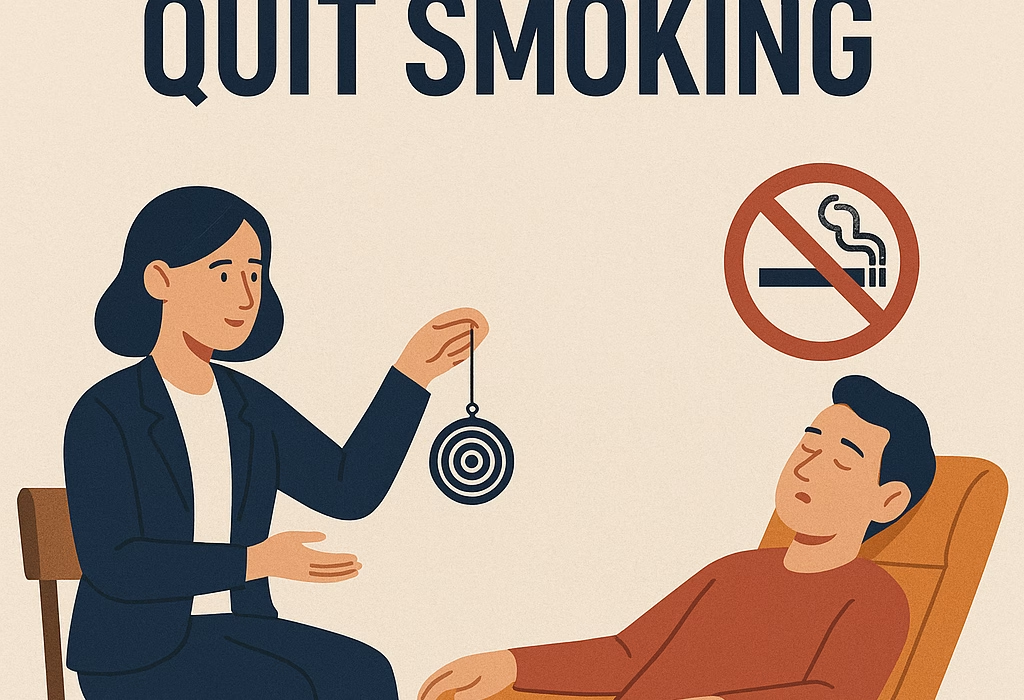
Quit smoking
Health

Quit Smoking for Good with Hypnotherapy in London

Giving up smoking can be one of the most challenging habits to break. It’s not just the nicotine that keeps you hooked—it’s the deeply ingrained routines, the emotional triggers, and the subconscious associations that make quitting so difficult.

Many people try patches, gum, or willpower alone, only to find themselves reaching for another cigarette. But what if you could rewire your mind to effortlessly become a non-smoker? That’s where hypnotherapy comes in—a powerful, fast, and proven method to help you quit smoking for good.

Why Hypnotherapy Works When Other Methods Fail

Most of my clients come to me after hearing about someone who quit smoking in just one session. And yes—it’s absolutely possible. Hypnotherapy has one of the highest success rates for smoking cessation because it works directly with the subconscious mind, where habits and cravings are rooted, and it’s no surprise: studies show hypnotherapy can be 2-3x more effective than nicotine replacement therapy (NRT) or going cold turkey (Green & Lynn, 2000).

Here’s why it works:

  • Targets the subconscious mind (where 95% of habits live) to dismantle cravings at their root.
  • Eliminates withdrawal anxiety by reframing your mental associations with smoking.

Cochrane meta-analysis (Barnes et al., 2019) found hypnosis significantly improved quit rates compared to minimal intervention, while a Mayo Clinic review acknowledges its potential to “alter subconscious triggers” that sustain addiction.

Unlike other methods that rely on willpower or nicotine replacement, hypnotherapy helps you:

  • Remove the psychological addiction – Breaking the mental patterns that make you reach for a cigarette.
  • Reset your identity – Shifting your self-image from “someone trying to quit” to a natural non-smoker.
  • Eliminate cravings – Many clients report that after hypnosis, they simply forget about smoking.

How Does Hypnotherapy Work So Quickly?

Your subconscious mind controls 95% of your behaviors, habits, and automatic responses. When you’re hypnotized, you enter a deeply relaxed state where your mind is open to positive suggestions.

In this state, we can:
✔ Reprogram your associations with smoking (so cigarettes no longer feel rewarding).
✔ Strengthen your motivation by aligning quitting with your deepest values (health, family, freedom).
✔ Install new, healthier habits to replace smoking effortlessly.

Imagine waking up one day and realizing you no longer think about cigarettes—no cravings, no struggle, just freedom. That’s the power of hypnotherapy.

The Life-Changing Benefits of Quitting Smoking

When you become a non-smoker, you’ll experience:

  • Better health – Reduced risk of cancer, heart disease, and lung damage.
  • More energy – Improved breathing, circulation, and stamina.
  • Sharper mind – No more brain fog; better focus and mental clarity.
  • Financial freedom – Save thousands per year by not buying cigarettes.
  • Confidence & control – Prove to yourself that you can change any habit.

Why Keep Struggling When You Can Quit Easily?

You’ve tried willpower. You’ve tried cutting down. Maybe you’ve even tried quitting before, only to start again. This time, let your mind do the work for you.

Hypnotherapy offers the fastest, most natural way to become a non-smoker—without withdrawal, cravings, or constant struggle.

Ready to quit for good?
👉 Contact me to start your smoke-free life today.

“You don’t have to quit smoking—you just have to become a non-smoker.”

References

  1. Green, J. P., & Lynn, S. J. (2000). Hypnosis and suggestion-based approaches to smoking cessation: An examination of the evidence. International Journal of Clinical and Experimental Hypnosis, 48(2), 195-224.
  2. Barnes, J., McRobbie, H., Dong, C. Y., Walker, N., & Hartmann-Boyce, J. (2019). Hypnotherapy for smoking cessation. Cochrane Database of Systematic Reviews, 6(6), CD001008.
  3. Mayo Clinic (2022). Hypnosis for smoking cessation: Does it work? Retrieved from https://www.mayoclinic.org/
  4. American Heart Association (2023). Benefits of Quitting Smoking. Retrieved from https://www.heart.org/
  5. Centers for Disease Control and Prevention (CDC, 2023). Health Benefits of Quitting Smoking Over Time. Retrieved from https://www.cdc.gov/
1 2 3 4 5 6
Privacy Settings
We use cookies to enhance your experience while using our website. If you are using our Services via a browser you can restrict, block or remove cookies through your web browser settings. We also use content and scripts from third parties that may use tracking technologies. You can selectively provide your consent below to allow such third party embeds. For complete information about the cookies we use, data we collect and how we process them, please check our Privacy Policy
Youtube
Consent to display content from - Youtube
Vimeo
Consent to display content from - Vimeo
Google Maps
Consent to display content from - Google
Spotify
Consent to display content from - Spotify
Sound Cloud
Consent to display content from - Sound