Articles Tagged with

london hypnotherapy

Home / london hypnotherapy
Health

Why Hypnotherapy is the Secret to Navigating Stress in 2026: A London Expert’s Guide

In the hustle of Central London, from the crowded platforms of the Underground to the high-pressure boardrooms of the City, stress has become an accepted part of life. But as we move through 2026, more people are realizing that “managing” stress isn’t enough—we need to rewire how our brains respond to it.

Whether you are looking for hypnotherapy in London or seeking an online hypnotherapist from anywhere in the world, understanding how the subconscious mind works is the first step toward lasting change.

How Hypnotherapy Works: Beyond the Myths

Many people still associate hypnosis with stage shows and loss of control. In reality, clinical hypnotherapy is a state of focused attention and heightened suggestibility. It allows us to bypass the “critical factor” of the conscious mind to reach the subconscious, where our deepest habits and anxieties live.

By accessing this state, we can replace outdated “survival” scripts (like panic or procrastination) with modern, empowering beliefs.

The London Advantage: World-Class Therapy in the Heart of the UK

London has long been a global hub for psychological excellence. Choosing a London-based hypnotherapist means you are working with practitioners who operate in one of the world’s most rigorously regulated and competitive wellness environments.

For my local clients, my clinic offers a sanctuary from the city’s pace. For my global clients, I bring that same “London Standard” of clinical expertise to our online hypnosis sessions via Teams.

Why Online Hypnotherapy is Taking Over in 2026

You no longer need to live in the UK to benefit from a London specialist. In fact, research shows that virtual hypnotherapy can be even more effective for many clients because:

  • Environmental Comfort: You are in your own space, allowing your nervous system to relax faster.
  • No Commute Stress: You don’t have to fight traffic or the Tube immediately after a deep session.
  • Global Access: Whether you are in New York, Dubai, or Singapore, you can access elite care at a time that suits your time zone.

What Can Hypnotherapy Help With?

My practice focuses on the most pressing issues facing high-performers and busy individuals today:

  1. Anxiety & Burnout: Calming the “always-on” nervous system.
  2. Public Speaking: Transforming “stage fright” into presence and authority.
  3. Sleep Optimization: Using hypnotic suggestion to reset your circadian rhythm.
  4. Habit Breaking: From smoking cessation to sugar cravings.

Ready to Reclaim Your Calm?

Visibility is about more than just being seen—it’s about being understood. If you’re ready to see how a blend of traditional hypnosis and modern cognitive techniques can help you thrive, let’s connect.

Book your free 15-minute discovery call today. Whether you want to visit me in my London clinic or meet virtually from anywhere in the world, your journey to a calmer mind starts here.

Lifestyle

Beyond Willpower: Why Your 2026 Resolutions Need the Subconscious Mind

Why do 80% of New Year’s resolutions fail by the second week of February?

We all know the pattern. The festive season in London ends, the decorations come down, and we are left with a surge of motivation. We buy the gym membership, we download the meditation app, and we promise ourselves that this year, we will finally get a handle on our stress or diet.

But fast forward to mid-February, and life gets in the way. The grey skies and the busy commute chip away at our energy, and old habits creep back in. We often blame ourselves, thinking we just didn’t have enough discipline.

As a hypnotherapist, I am here to tell you: It is not your fault, and it is not a lack of willpower. It is simply a conflict between your conscious desires and your subconscious programming.

The Iceberg Effect: Understanding Your Mind

To understand why resolutions fail, you have to look at how the mind operates. Think of your mind like an iceberg floating in the ocean.

  • The Tip (10% – The Conscious Mind): This is the part of you reading this blog. It is logical, analytical, and sets goals like “I want to stop snacking on sugar” or “I want to be more confident at work.”
  • The Hidden Mass (90% – The Subconscious Mind): This is where your automatic behaviours, emotional memories, and self-protection mechanisms live. It is the autopilot that drives your life.

When you use willpower, you are using the 10% to fight the 90%. If your subconscious believes that “sugar equals comfort” or “worrying keeps me safe,” it will eventually overpower your conscious logic. This is why “cold turkey” changes rarely last.

How Hypnotherapy Bridges the Gap

Hypnotherapy is the key to accessing that submerged 90%. It allows us to bypass the “Critical Faculty”, the guard at the gate of your mind, and speak directly to the subconscious.

Instead of fighting your instincts, we update them. We use deep relaxation and targeted suggestion to align your deep-seated beliefs with your new goals. When your subconscious wants the same thing as your conscious mind, the struggle disappears. Healthy choices start to feel natural rather than forced.

A Special Note on “Gut Feelings” and Health Goals

One of the most common resolutions I see is the desire to “get healthy” or “fix my digestion” after the indulgences of December. This is close to my heart, as I specialize in gut-directed hypnotherapy.

If you suffer from IBS or digestive issues, you likely know that stress is a major trigger. No amount of strict dieting will fix a sensitive gut if your nervous system is constantly in “fight or flight” mode.

  • The Resolution: “I will go on a strict diet.”
  • The Reality: The stress of the strict diet triggers the gut, causing more bloating and discomfort.
  • The Hypnotherapy Approach: We teach the gut-brain axis to relax. We visualize the digestive system functioning smoothly. By lowering the internal stress response, we often see a significant reduction in physical symptoms, allowing you to enjoy food without fear in 2026.

3 Ways to Prime Your Mind for Success

You don’t have to wait for your first session to start shifting your mindset. Here are three techniques to help your resolutions stick:

  1. Focus on the “Why,” Not the “What”: Don’t just write down “Lose weight.” Close your eyes and visualize how you will feel when you achieve it. Imagine the energy you’ll have walking through the park, or how your clothes will fit. The subconscious speaks the language of images and feelings, not words.
  2. Phrase Goals in the Present Tense: Avoid saying “I will be calm.” This puts the goal in the future, just out of reach. Instead, tell yourself, “I am becoming calmer every day.” This trains the brain to accept this as your current reality.
  3. Start Before January 1st: There is no magic in the date. By starting to visualize your success now, you remove the pressure of the “big day” and start the year with momentum.

Make 2026 Your Year of Lasting Change

If you are based in London and are tired of the annual cycle of setting goals and abandoning them, let’s try a different approach.

At London Hypnotics, I help clients rewire the habits that hold them back, whether that’s soothing a troubled gut, managing anxiety, or building confidence. Let’s work together to make your 2026 resolutions the ones that finally stick.

Online hypnotherapy photo
Health

Online Hypnotherapy: Top 10 tips for a successful trance experience.

After pandemic the world has changed dramatically when it comes to work, how we work and the type of work we provide. My job was one of those that had dramatic change, but luckily for the better. During pandemic mental health crisis was at a skyrocket high and most people who had their lives changed overnight found it difficult to come. This is when most of my clients begun to seek for treatments for anxiety and panic attacks. Online Hypnotherapy was not something new until then, however little that I know, my whole job would emerge fully to an online platform.

At first I decided to test it with some of my friends because I didn’t know if this was effective treatment as it is in person, to my surprise, all of the subjects who decided to take part on my experiment reported significant results on their anxiety levels being stabilized and reduced following treatment from online Hypnotherapy. That gave me the confidence to continue and advertise my services being fully online. Following months of trials with various difference clients I found the perfect way to make someones experience as effective as it could be.

So here I have gathered my top 10 tips of how to make Online Hypnotherapy as effective as you can to gain the most of this amazing treatment.

1. Prepare a Quiet, Private Space

Choose a room where you will not be disturbed during your session, and inform others in your household to respect your privacy.

2. Test Your Technology Early

Check your internet connection, camera, and microphone before the session, and keep your device charged or plugged in.

3. Eliminate Distractions

Silence your phone and notifications, close unnecessary tabs or apps, and set pets or other potential distractions outside your session area.

4. Use Comfortable Seating

Sit in a comfortable chair or lie down on a couch or recliner where you can completely relax your body.

5. Dress Comfortably

Wear clothing that helps you feel relaxed and at ease for the duration of the session.

6. Be Punctual

Log on a few minutes early to settle in, relax, and avoid feeling rushed at the start of your session.

7. Have Water Nearby

Keep a glass of water within reach, and use the restroom before your session starts.

8. Be Honest and Open with Your Therapist

Share relevant information, emotions, or concerns so your therapist can tailor the session to your needs.

9. Commit to the Process

Approach your session with an open mind and willingness to participate fully, even if hypnosis is new to you.

10. Set an Intention

Clarify your main goal for each session with your therapist so your focus and motivation remain clear throughout.

Public Speaking Hypnotherapy
Lifestyle

Hypnotherapy for Public Speaking Fear: The Art of Becoming Comfortable with the Uncomfortable

The Whisper of Fear: Why Trying to Be Confident Fails

If the thought of standing up to speak sends a jolt of ice water through your stomach, you are not alone. That familiar racing heart, the dry mouth, the sudden, overwhelming urge to retreat, it’s a powerful, primal fear.

Many people try to conquer this anxiety by sheer willpower. They tell themselves, “I must be confident! Stop shaking!” But the conscious command often meets resistance, and the inner critic only shouts louder. The direct command, “Don’t panic!” paradoxically makes the body focus entirely on the panic it’s supposed to avoid.

Public Speaking Hypnotherapy
Image by Freepik

The Ericksonian Difference: We Don’t Fight the Fear, We Listen to It

As a specialist in Ericksonian hypnotherapy here in London, I know that true, lasting confidence isn’t forced; it’s discovered. Dr. Milton Erickson understood that the unconscious mind is inherently resourceful. When we try to command ourselves, we engage the critical, conscious mind. But when we offer a gentle, indirect suggestion, a story, a metaphor, a permission to be imperfect—we bypass the internal censor and allow the unconscious to reveal the solution it already holds.

You don’t have to defeat the fear; you simply need to realize you have the resources to be comfortable, even when feeling a bit of that familiar energy.

The Trap of Direct Suggestion

Imagine trying to steer a ship by yelling instructions at the sails. They might flap, but the rudder, the true source of direction remains untouched. Direct suggestions like, “You are calm now,” often feel inauthentic to the part of you that is genuinely scared. This leads to a disconnect, where the mind rejects the suggestion because it feels like a lie.

This is why, in effective hypnotherapy for public speaking anxiety, we use the elegant power of indirect suggestions. We don’t push a locked door; we open a nearby window instead.

The Gentle Invitation to Change

Indirect suggestions use permissive language and embedded commands that allow your mind to accept the change on its own terms. Instead of demanding calm, we might suggest:

“…and as you listen, you might begin to notice a deep, comfortable feeling of knowing exactly where you are and where you are going, just like the feeling you have when you are completely absorbed in something you love…”

This language gently invites the unconscious to link the feeling of focus and comfort (a known resource) to the act of speaking.

The Art of Becoming Comfortable with the Uncomfortable

The most successful speakers rarely feel zero nerves. Instead, they’ve simply reframed that nervous energy. That rapid heartbeat isn’t a sign of danger; it’s energy being pumped, readying you for peak performance.

Hypnotherapy for confident speaking helps you reclaim that energy. Through subtle reframing, we shift the meaning of the physical symptoms. A quickened breath isn’t panic; it’s anticipation. Sweaty palms aren’t a sign of failure; they’re a sign your body is focused and engaged.

The Climber’s Story: Finding Your Center on Unstable Ground

The therapeutic power of storytelling allows your mind to practice a new perspective in a safe, metaphorical space.

I remember reading about a seasoned mountain climber who was asked what the most important skill was on a sheer rock face. They didn’t say strength or gear; they said it was knowing how to shift their weight when the path felt unstable.

They explained that the instability wasn’t a warning sign to stop, but a prompt to find a deeper, more centered way forward. The moment they accepted the feeling of instability as information—a nudge to adjust—they became incredibly effective. And that ability to find a deeper center, to adjust with flexibility when things feel unsteady, well, that’s what truly got them to the top.

Your unconscious mind effortlessly absorbs this story, recognizing the metaphor: the ‘unstable path’ is the nervous energy before a talk. The indirect suggestion is that you already have the ability to find your deep, inner center and adjust, continuing forward successfully.

Take the Next Step to Unconscious Confidence in London

As a hypnotherapist specializing in this gentle, narrative-driven approach, I help busy London professionals, just like you, unlock their inherent resources. We won’t try to force your nerves away; we will simply allow your unconscious mind to craft a better, more resourceful response.

If you are ready to stop fighting your nerves and start speaking with the authentic, grounded confidence that is already waiting for you, I invite you to explore this truly transformative path.

Ready to let your unconscious mind lead you toward comfortable, confident public speaking? Book a discovery call with me today.

Health

Why Your IBS Isn’t Just in Your Gut: The Surprising Role of the Mind

For many people living with Irritable Bowel Syndrome (IBS), the condition feels like an endless cycle of discomfort, bloating, and unpredictable flare-ups. Traditional treatments such as diet changes, medication, or supplements often bring only partial relief. But what if your gut symptoms weren’t just about what you eat, but also about what you think and feel?

Courtesy of Freepik

Recent research shows that IBS is not purely a digestive problem. Instead, it is a disorder of the gut-brain axis, the two-way communication system between your digestive system and your nervous system. Understanding this connection can transform how you manage your symptoms, and hypnotherapy may play a unique role in breaking the cycle.


The Gut-Brain Connection

Your gut is sometimes called your “second brain.” It has its own nervous system, called the enteric nervous system, which communicates with the brain through the vagus nerve. This means your digestive health is strongly influenced by your emotional state.

When you feel stressed or anxious, your body goes into “fight or flight” mode. Blood flow shifts away from digestion, gut motility changes, and inflammation can increase. All of this can worsen IBS symptoms.


The Vicious Cycle of IBS and Anxiety

Here’s the problem: not only does stress worsen IBS, but IBS itself increases stress. Many clients describe a constant worry about flare-ups when leaving the house, at work, or during social events. This creates a feedback loop:

Stress and anxious thoughts amplify gut sensitivity.
Gut symptoms trigger more stress and anxiety.

Breaking this cycle requires more than diet or medication alone. It means addressing both the mind and the body.


How Hypnotherapy Can Help

Hypnotherapy works by guiding you into a relaxed state where your subconscious mind is more open to positive suggestions. With gut-directed hypnotherapy, we can:

Calm the nervous system, reducing the overactive stress response that worsens IBS.
Retrain subconscious patterns, breaking the association between stress and gut symptoms.
Promote healthy gut function, by visualising smooth digestion and reduced sensitivity.

Clinical studies have shown that gut-focused hypnotherapy can lead to long-term improvement in IBS symptoms for many patients who did not respond to conventional treatment.


A Client Story (Anonymised)

A client came to me after years of trying strict diets and medications for IBS. She felt trapped, avoiding social situations and constantly anxious about flare-ups. After a tailored hypnotherapy programme, she noticed not only a reduction in gut pain and bloating but also a greater sense of control and calmness in daily life. For her, hypnosis became the missing piece, addressing the mind as well as the body.


Moving Beyond “Coping”

If you’ve been told to “just manage stress” without real tools, you may feel frustrated. Hypnotherapy offers more than relaxation — it helps you change the way your mind and body interact, reducing symptoms and restoring confidence in daily life.

At London Hypnotics, based in 364 City Road, London, I specialise in gut-directed hypnotherapy, combining the latest science with a compassionate, personalised approach.

Frequently Asked Questions about IBS and Hypnotherapy

Can stress really cause IBS symptoms?
Yes. Stress does not cause IBS on its own, but it can make symptoms worse. The gut and brain are connected through the gut-brain axis, so anxiety and stress can directly influence digestion and trigger flare-ups.

Does hypnotherapy actually work for IBS?
Research shows that gut-directed hypnotherapy can reduce pain, bloating, and bowel issues in many IBS patients. It helps calm the nervous system and retrain the subconscious response between the mind and the gut.

How long does hypnotherapy take to help IBS?
Most people notice improvement within 4 to 6 sessions. Some may feel relief sooner, while others with more severe symptoms may benefit from longer-term treatment.

Is hypnotherapy safe for IBS?
Yes. Hypnotherapy is a safe and drug-free approach. It involves deep relaxation and guided visualisation, and you remain fully in control throughout the session.

Can hypnotherapy help if nothing else has worked for my IBS?
Many people turn to hypnotherapy after years of trying diets, medication, and other therapies with little success. Clinical trials suggest it can be effective even when other treatments have failed.

Final Thoughts

IBS is not “all in your head.” It is a real, complex condition influenced by the powerful connection between your gut and your mind. By working with this connection, instead of fighting against it, you can unlock new ways of finding relief.

If you’re ready to explore how hypnotherapy can help you manage IBS and reclaim your quality of life, you can learn more or book a session at: London Hypnotics

References

  1. Mayer, E. A. (2011). Gut feelings: the emerging biology of gut–brain communication. Nature Reviews Neuroscience, 12(8), 453–466.
  2. Whorwell, P. J., Prior, A., & Faragher, E. B. (1984). Controlled trial of hypnotherapy in the treatment of severe refractory irritable-bowel syndrome. The Lancet, 324(8414), 1232–1234.
  3. Vasant, D. H., Paine, P. A., Black, C. J., Houghton, L. A., & Ford, A. C. (2021). British Society of Gastroenterology guidelines on the management of irritable bowel syndrome. Gut, 70(7), 1214–1240.

Lifestyle

The August Blues – Why They Happen and How Hypnotherapy in London Can Help

At first glance, August should be the happiest month of the year. London parks are full of life, holiday plans are in full swing, and the evenings are still warm and light. Yet, for many people, August brings an unexpected emotional dip known as the August Blues.

Instead of feeling energised, they report sadness, irritability, lack of motivation, or a vague sense of emptiness. If this sounds familiar, you’re not alone—and there’s a reason it happens.

As a hypnotherapist in London who works with clients facing anxiety, stress, and seasonal mood changes, I see the August Blues as a perfect example of how the brain and body connection influences emotional health.

Picture by Freepik

Why Do People in London Experience the August Blues?

1. The Transition Effect

August is a bridge between two worlds: the relaxed flow of summer and the structured pace of autumn. Even without a school timetable, the “back to school” mentality is deeply rooted in our culture. In a busy city like London—where September often means faster commutes, packed schedules, and rising workloads—this shift can trigger a subtle stress response.

2. End-of-Summer Reflection

London summers often come with a list of hopes: more time outdoors, weekend trips, and social gatherings. When August arrives, we may realise we haven’t ticked off everything, leading to disappointment or self-criticism.

3. Social Comparison Pressure

Scrolling through Instagram in August can feel like watching everyone else enjoy dream holidays in Greece or Spain while you’re stuck in the office. Even when we know these are curated snapshots, our subconscious still compares—and often leaves us feeling left out.

4. Physiological Shifts

Although August days are still long, the evenings are subtly shorter. This shift affects your body’s circadian rhythm, which in turn influences mood-regulating chemicals like serotonin and melatonin. For some, this is enough to trigger low mood, especially if combined with disrupted sleep from hot nights.

5. Emotional Fatigue

Many Londoners have been running on adrenaline for months—juggling work, commuting, social events, and family life. By August, the body may finally be signalling that it’s time to slow down. This can feel like exhaustion, demotivation, or mild burnout.


The Mind-Body Connection in Seasonal Mood Changes

What we think affects how we feel physically, and how our body feels influences our thoughts. Low mood affects posture, breathing, and muscle tension, which then feed back into emotional heaviness.

Hypnotherapy is particularly effective here because it works at the level of the subconscious mind—calming the nervous system, breaking unhelpful thought patterns, and reintroducing positive emotional states that feel authentic.


How Hypnotherapy in London Can Help with the August Blues

At London Hypnotics, I use clinical hypnotherapy to help clients shift their mindset, release anxiety, and reconnect with motivation. For the August Blues, hypnotherapy can:

  • Reduce anxiety about change – Turning seasonal transitions into opportunities instead of threats.
  • Reframe negative thinking – Focusing on what’s been achieved rather than what hasn’t.
  • Boost emotional energy – Reigniting motivation for the months ahead.
  • Restore work-life balance – Helping you feel productive without burning out.
  • Increase seasonal resilience – So that mood remains stable year-round.

A Simple Self-Hypnosis Technique You Can Try at Home

If you’re feeling the August Blues, try this short exercise:

  1. Find a quiet space and sit comfortably.
  2. Close your eyes and take three slow, deep breaths.
  3. Visualise a calming late-summer scene—perhaps a London park at sunset, with golden light through the trees.
  4. Breathe in the colours, sounds, and feelings of this scene, letting them spread through your body.
  5. Repeat silently: “I am calm, energised, and ready for the next chapter.”
  6. Open your eyes slowly and return to the present moment.

This is just a small taste—working with a trained hypnotherapist can help you anchor these feelings deeply, so they become part of your natural emotional state.


At a glance

The August Blues are not a personal failing—they’re a natural response to change, reflection, and the shifting rhythms of the year. With the right tools, they can be transformed into a period of renewal and motivation.

If you’re experiencing low mood, anxiety, or stress this August, hypnotherapy at London Hypnotics, 364 City Road, London, could help you move forward with clarity and confidence.


References:

  • Lam, R. W., Levitt, A. J., & Levitan, R. D. (2006). The August Blues and Seasonal Changes in Mood. Journal of Affective Disorders, 94(1–3), 85–90.
  • Thompson, R., & Bishop, S. (2012). Seasonal affective changes and their psychosocial impact. British Journal of Psychology, 103(1), 27–45.
  • Spiegel, H., & Spiegel, D. (2004). Trance and Treatment: Clinical Uses of Hypnosis. American Psychiatric Publishing.
  • Davidson, R. J., & McEwen, B. S. (2012). Social influences on neuroplasticity: Stress and interventions to promote well-being. Nature Neuroscience, 15(5), 689–695.
Health

From Freeze to Flow: Hypnotherapy for Overwhelm and Burnout

“Why can’t I just get on with things?”

If you’ve ever found yourself staring at your screen, mind racing yet body frozen, unable to act — you’re not alone. Many of my clients describe this state as a frustrating limbo: exhausted, overwhelmed, and inexplicably stuck.

This is the “freeze” response — a lesser-known cousin of fight-or-flight — and it’s a very real nervous system reaction to modern stress. At London Hypnotics, I help clients move out of this shutdown state and into what I call “flow” — a more resourceful, calm, and energised way of being — using targeted, evidence-based hypnotherapy.

Image by Freepik

Understanding Burnout and the Freeze Response

Burnout is more than just stress. It’s chronic emotional and physical exhaustion caused by prolonged pressure — whether from work, caregiving, or internal expectations. And it doesn’t always manifest as frantic busyness. Sometimes, burnout looks like apathy, procrastination, or emotional numbness.

This is the nervous system hitting the brakes — a survival response.

When under sustained pressure, the brain may move into:

  • Hyperarousal – anxiety, overthinking, panic.
  • Hypoarousal – fatigue, fog, emotional disconnection (aka freeze).

Both are signs your system is overloaded and needs a reset.


How Hypnotherapy Helps Regulate the Nervous System

Hypnotherapy is a safe, natural tool to rebalance your autonomic nervous system — shifting you from sympathetic (stress) to parasympathetic (rest and restore) states.

During hypnosis, you access a deeply relaxed trance state, where the subconscious mind is more receptive to change. In this state, I guide you to:

  • Release internal pressure and perfectionism.
  • Reconnect with your own rhythm, not society’s pace.
  • Rewire unhelpful thought loops (like “I’m not doing enough”).
  • Rebuild safety, clarity, and motivation from the inside out.

It’s not about doing more — it’s about restoring your capacity to be.


From Freeze to Flow: What That Feels Like

Clients often report that after even a few sessions:

  • “I can finally breathe again.”
  • “My body feels lighter.”
  • “I’m able to make decisions without second-guessing.”
  • “I feel more present with my family.”
  • “Work no longer drains me in the same way.”

This is flow — a nervous system in balance, with energy moving freely again. It’s not just about productivity, but living with more ease, joy, and spaciousness.


Why August is the Perfect Time to Begin

August, often seen as a month for holidays and downtime, can be surprisingly stressful for many:

  • The expectation to relax can feel like pressure itself.
  • There’s anxiety about “catching up” or “starting strong” in September.
  • And for those not able to take time off, burnout can deepen.

If this resonates with you, now is the time to recalibrate — not when you hit a wall. Hypnotherapy offers a gentle yet powerful way to reset your system before autumn arrives.


What to Expect at London Hypnotics

My approach is integrative, trauma-informed, and rooted in both science and compassion. Sessions are held at my calming practice on City Road in London, and I also offer online sessions for convenience.

Each session is tailored to you. Whether you’re navigating burnout, anxiety, or simply feel emotionally ‘stuck’, we’ll work together to help your system move from freeze to flow.


Ready to reconnect with your calm, focused self?

📍 Visit me at 364 City Road, London
🌐 Book a session at www.london-hypnotics.co.uk


References

  1. Porges, S. W. (2011). The Polyvagal Theory: Neurophysiological Foundations of Emotions, Attachment, Communication, and Self-regulation.
  2. Sapolsky, R. M. (2004). Why Zebras Don’t Get Ulcers.
  3. Hammond, D. C. (2010). Hypnosis in the treatment of anxiety- and stress-related disorders. Expert Review of Neurotherapeutics.
  4. Van der Kolk, B. (2014). The Body Keeps the Score: Brain, Mind, and Body in the Healing of Trauma.
  5. Jensen, M. P. et al. (2009). Hypnosis for chronic pain management: a new hope. Int J Clin Exp Hypn.
Losing weight
Health, Lifestyle, Uncategorized

Hypnotherapy for Weight Loss. How does it work, and why is it so successful?

By Antonios Koletsas, Hypnotherapist & Founder of London Hypnotics

As an Ericksonian hypnotherapist specializing in weight loss and gut health, I’ve seen firsthand how traditional dieting often fails—not because people lack willpower but because their subconscious mind is working against them. At London Hypnotics, my clients frequently come to me after years of yo-yo dieting, frustrated that they can’t break free from emotional eating, cravings, or self-sabotage.

The good news? Hypnotherapy offers a powerful solution—one that doesn’t rely on restrictive diets or sheer willpower. Instead, it works by rewiring the deep-seated beliefs and habits that keep people stuck in unhealthy patterns.

But how exactly does it work? And why is it so much more effective than willpower alone? Let me explain.


Why Diets Fail (And How Hypnotherapy Succeeds)

Most diets focus on what you eat, but they ignore why you eat.

  • Are you reaching for food when stressed, bored, or lonely?
  • Do you sabotage yourself after a small slip-up?
  • Do you know what to do, but struggle to stick with it?

These are subconscious behaviors, and no amount of calorie counting will change them. That’s where hypnotherapy comes in.


How Hypnotherapy Helps You Lose Weight Naturally

Hypnosis works by guiding you into a deeply relaxed state where your critical mind steps aside, allowing positive suggestions to take root. At London Hypnotics, my approach includes:

1. Breaking the Emotional Eating Cycle

Many of my clients don’t overeat because they’re hungry—they do it because food has become their comfort mechanism. Through hypnosis, we reprogram those triggers, so you no longer turn to food for emotional relief.

2. Eliminating Cravings at the Root

Ever felt like sugar or junk food has a magnetic pull on you? That’s not just willpower—it’s your subconscious programming. Hypnotherapy helps dissolve cravings by changing how your brain perceives unhealthy foods.

3. Building Unshakable Motivation

Willpower is exhausting. But when your subconscious mind is aligned with your goals, healthy choices become effortless. My clients often tell me, “I just stopped wanting junk food—it’s like my tastes changed overnight.”

4. Creating a Positive Self-Image

Self-sabotage often comes from deep-seated beliefs like “I’ll always be overweight” or “I don’t deserve to be healthy.” Hypnotherapy replaces these limiting thoughts with confidence and self-belief, making lasting change possible.

Why Hypnotherapy Works When Other Methods Don’t

It Gets to the Root Cause

Unlike diets that just treat symptoms (weight), hypnotherapy fixes the real problem: your mindset.

It’s Backed by Science

Studies show hypnosis doubles weight loss results compared to dieting alone (Journal of Consulting and Clinical Psychology, 1996). My clients often see changes in just 3-5 sessions because we’re working at the subconscious level.

It’s Natural & Sustainable

No pills, no extreme diets—just retraining your brain to support your health effortlessly.


What to Expect in a Session with Me

When you come to London Hypnotics, we’ll:

  1. Identify Your Triggers – What’s really driving your eating habits?
  2. Relax into Hypnosis – A calming, guided process (you’re always in control).
  3. Reprogram Your Mind – We’ll install new, healthier habits at a deep level.
  4. Lock in the Changes – So your progress lasts long-term.

Many clients leave their first session feeling lighter, more in control, and strangely indifferent to foods that used to tempt them.


Final Thought: Your Mind Is Your Most Powerful Tool

If you’ve tried diets before and failed, it’s not your fault—you just weren’t given the right tool. Hypnotherapy works because it doesn’t fight your mind; it works with it.

As I tell my clients:

“You don’t need more willpower. You need to change the programming that’s working against you.”

If you’re ready to lose weight without struggle, hypnotherapy might be the missing piece.

Ready to embark on your new journey? Book your Hypnotherapy consultation here.

References

  • Kirsch, I. (1996). Hypnotic enhancement of cognitive-behavioral weight loss treatments: Another meta-reanalysis. Journal of Consulting and Clinical Psychology, 64(3), 517-519.
  • Allison, D. B., et al. (2008). Hypnosis as an adjunct to cognitive-behavioral psychotherapy for obesity: A meta-analytic reappraisal. International Journal of Clinical and Experimental Hypnosis, 56(2), 147-166.
Hypnosis in Action
Health

Is Hypnosis Real? How it Works and What Science says.

As a hypnotherapist in London, I often encounter scepticism about hypnosis. Many people wonder: Is hypnosis real, or just a stage trick? The short answer is yes, hypnosis is real, and scientific research backs its effectiveness for therapy, pain management, and behavioural change.

In this article, we’ll explore the science behind hypnosis, how it works, and its proven benefits—so you can make an informed decision about hypnotherapy in London or anywhere else.

What Is Hypnosis?

Hypnosis is a focused state of attention where individuals become more open to suggestion while remaining fully aware. Contrary to popular myths, you cannot be controlled against your will—instead, hypnosis helps bypass the critical mind to promote positive change.

According to Cleveland Clinic, hypnosis is a legitimate therapeutic tool used in clinical settings for:

  • Anxiety & stress relief
  • Smoking cessation
  • Weight loss
  • Pain management
  • Overcoming phobias

The Science Behind Hypnosis

Research shows that hypnosis isn’t just relaxation—it creates measurable changes in brain activity.

1. Hypnosis Alters Brain Function

TIME article highlights studies using fMRI scans, revealing that hypnotised individuals show:

  • Reduced activity in the default mode network (linked to self-focused thoughts)
  • Increased connectivity between brain regions, enhancing focus and suggestibility

This explains why hypnosis helps people break negative thought patterns and adopt healthier habits.

2. Hypnosis for Pain Management

Healthline reports that hypnosis can reduce pain perception by up to 40%, making it a powerful alternative to medication. Studies show it’s effective for:

  • Chronic pain
  • Childbirth (hypnobirthing)
  • Dental procedures

3. Hypnosis & Behavioural Change

The UK Hypnosis Network explains that hypnosis works by accessing the subconscious mind, where habits and emotions reside. This is why it’s so effective for:

  • Quitting smoking
  • Overcoming insomnia
  • Boosting confidence

Debunking Hypnosis Myths

✅ Myth: Hypnosis is mind control.
Fact: You’re always in control—hypnosis simply helps you focus deeply on positive suggestions.

✅ Myth: Only weak-minded people can be hypnotised.
Fact: Research shows that people with higher imagination and focus respond best to hypnosis.

✅ Myth: Hypnosis is just relaxation.
Fact: While relaxation helps, hypnosis induces a unique trance state with proven neurological effects.

Final Verdict: Hypnosis Is Real & Effective

Science confirms that hypnosis is a legitimate therapeutic tool—not magic, but a powerful psychological technique. Whether you’re seeking hypnotherapy in London for anxiety, addiction, or performance enhancement, hypnosis offers a drug-free, evidence-based solution.

Ready to Try Hypnotherapy in London?

As a certified London hypnotherapist, I help clients overcome mental blocks, reduce stress, and achieve lasting change. Book a consultation today and experience the science-backed benefits of hypnosis!

References

  1. Healthline. (n.d.). Is Hypnosis Real? Retrieved from https://www.healthline.com/health/is-hypnosis-real
  2. Cleveland Clinic. (n.d.). Hypnosis. Retrieved from https://my.clevelandclinic.org/health/treatments/22676-hypnosis
  3. TIME. (2018). Is Hypnosis Real? Here’s What Science Says. Retrieved from https://time.com/5380312/is-hypnosis-real-science/
  4. UK Hypnosis. (2019). Is Hypnosis Real or Just Imaginings? Retrieved from https://www.ukhypnosis.com/2019/02/11/is-hypnosis-real-or-just-imaginings/
  5. Deeley, Q. et al. (2012).“Modulation of pain perception by hypnosis and fMRI.”
  6. Jiang, H. et al. (2017).“Brain Mechanisms of Hypnotic Responders.”
    • Findings: Highly hypnotizable individuals show stronger functional connectivity in the dorsolateral prefrontal cortex (suggestibility control).
    • Source: *NeuroImage, 152, 400-410.*
  7. Elkins, G. et al. (2007).“Hypnotherapy for Chronic Pain Management.”
  8. Patterson, D. R., & Jensen, M. P. (2003).“Hypnosis and Clinical Pain.”
  9. Schoenberger, N. E. (2000).“Hypnosis in the Treatment of Anxiety.”
  10. Green, J. P., & Lynn, S. J. (2000).“Hypnosis and Smoking Cessation: A Meta-Analytic Study.”
  11. Palsson, O. S. et al. (2002).“Hypnosis Treatment for Severe IBS.”Findings: 80% of IBS patients improved with hypnosis, with long-term benefits.
  12. Source: *Gastroenterology, 122(7), 1770-1777.*

Quit smoking
Health

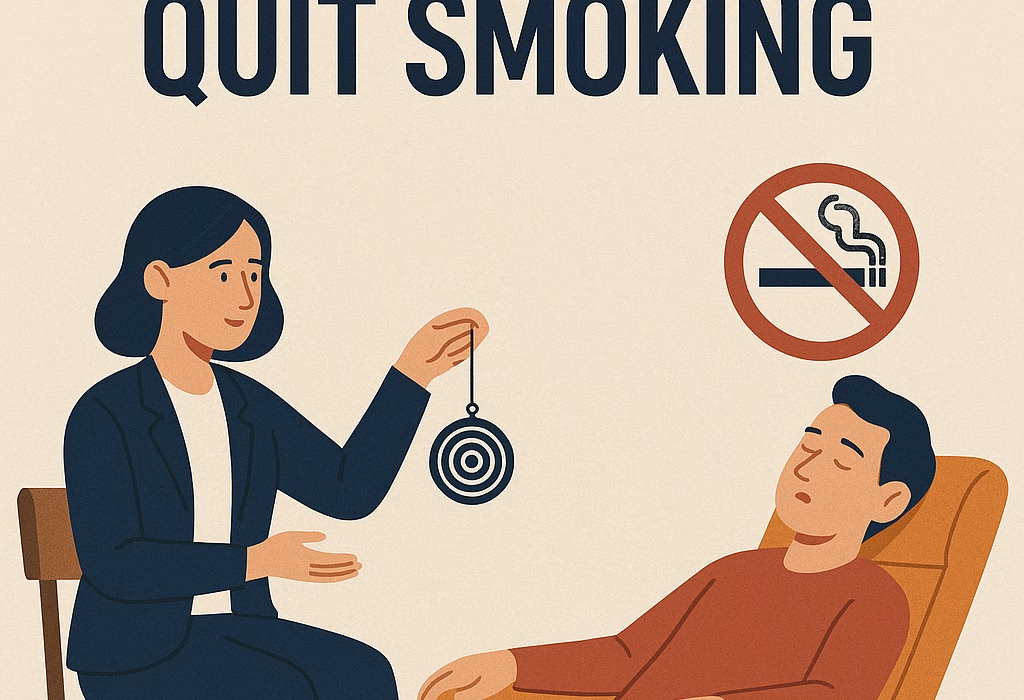
Quit Smoking for Good with Hypnotherapy in London

Giving up smoking can be one of the most challenging habits to break. It’s not just the nicotine that keeps you hooked—it’s the deeply ingrained routines, the emotional triggers, and the subconscious associations that make quitting so difficult.

Many people try patches, gum, or willpower alone, only to find themselves reaching for another cigarette. But what if you could rewire your mind to effortlessly become a non-smoker? That’s where hypnotherapy comes in—a powerful, fast, and proven method to help you quit smoking for good.

Why Hypnotherapy Works When Other Methods Fail

Most of my clients come to me after hearing about someone who quit smoking in just one session. And yes—it’s absolutely possible. Hypnotherapy has one of the highest success rates for smoking cessation because it works directly with the subconscious mind, where habits and cravings are rooted, and it’s no surprise: studies show hypnotherapy can be 2-3x more effective than nicotine replacement therapy (NRT) or going cold turkey (Green & Lynn, 2000).

Here’s why it works:

  • Targets the subconscious mind (where 95% of habits live) to dismantle cravings at their root.
  • Eliminates withdrawal anxiety by reframing your mental associations with smoking.

Cochrane meta-analysis (Barnes et al., 2019) found hypnosis significantly improved quit rates compared to minimal intervention, while a Mayo Clinic review acknowledges its potential to “alter subconscious triggers” that sustain addiction.

Unlike other methods that rely on willpower or nicotine replacement, hypnotherapy helps you:

  • Remove the psychological addiction – Breaking the mental patterns that make you reach for a cigarette.
  • Reset your identity – Shifting your self-image from “someone trying to quit” to a natural non-smoker.
  • Eliminate cravings – Many clients report that after hypnosis, they simply forget about smoking.

How Does Hypnotherapy Work So Quickly?

Your subconscious mind controls 95% of your behaviors, habits, and automatic responses. When you’re hypnotized, you enter a deeply relaxed state where your mind is open to positive suggestions.

In this state, we can:
✔ Reprogram your associations with smoking (so cigarettes no longer feel rewarding).
✔ Strengthen your motivation by aligning quitting with your deepest values (health, family, freedom).
✔ Install new, healthier habits to replace smoking effortlessly.

Imagine waking up one day and realizing you no longer think about cigarettes—no cravings, no struggle, just freedom. That’s the power of hypnotherapy.

The Life-Changing Benefits of Quitting Smoking

When you become a non-smoker, you’ll experience:

  • Better health – Reduced risk of cancer, heart disease, and lung damage.
  • More energy – Improved breathing, circulation, and stamina.
  • Sharper mind – No more brain fog; better focus and mental clarity.
  • Financial freedom – Save thousands per year by not buying cigarettes.
  • Confidence & control – Prove to yourself that you can change any habit.

Why Keep Struggling When You Can Quit Easily?

You’ve tried willpower. You’ve tried cutting down. Maybe you’ve even tried quitting before, only to start again. This time, let your mind do the work for you.

Hypnotherapy offers the fastest, most natural way to become a non-smoker—without withdrawal, cravings, or constant struggle.

Ready to quit for good?
👉 Contact me to start your smoke-free life today.

“You don’t have to quit smoking—you just have to become a non-smoker.”

References

  1. Green, J. P., & Lynn, S. J. (2000). Hypnosis and suggestion-based approaches to smoking cessation: An examination of the evidence. International Journal of Clinical and Experimental Hypnosis, 48(2), 195-224.
  2. Barnes, J., McRobbie, H., Dong, C. Y., Walker, N., & Hartmann-Boyce, J. (2019). Hypnotherapy for smoking cessation. Cochrane Database of Systematic Reviews, 6(6), CD001008.
  3. Mayo Clinic (2022). Hypnosis for smoking cessation: Does it work? Retrieved from https://www.mayoclinic.org/
  4. American Heart Association (2023). Benefits of Quitting Smoking. Retrieved from https://www.heart.org/
  5. Centers for Disease Control and Prevention (CDC, 2023). Health Benefits of Quitting Smoking Over Time. Retrieved from https://www.cdc.gov/
1 2 3 4
Privacy Settings
We use cookies to enhance your experience while using our website. If you are using our Services via a browser you can restrict, block or remove cookies through your web browser settings. We also use content and scripts from third parties that may use tracking technologies. You can selectively provide your consent below to allow such third party embeds. For complete information about the cookies we use, data we collect and how we process them, please check our Privacy Policy
Youtube
Consent to display content from - Youtube
Vimeo
Consent to display content from - Vimeo
Google Maps
Consent to display content from - Google
Spotify
Consent to display content from - Spotify
Sound Cloud
Consent to display content from - Sound